

Allow Your Radiance to become Erotic Emancipation
Radiance Code 21 — I Expand the Notion of the “Erotic” as My Full Aliveness

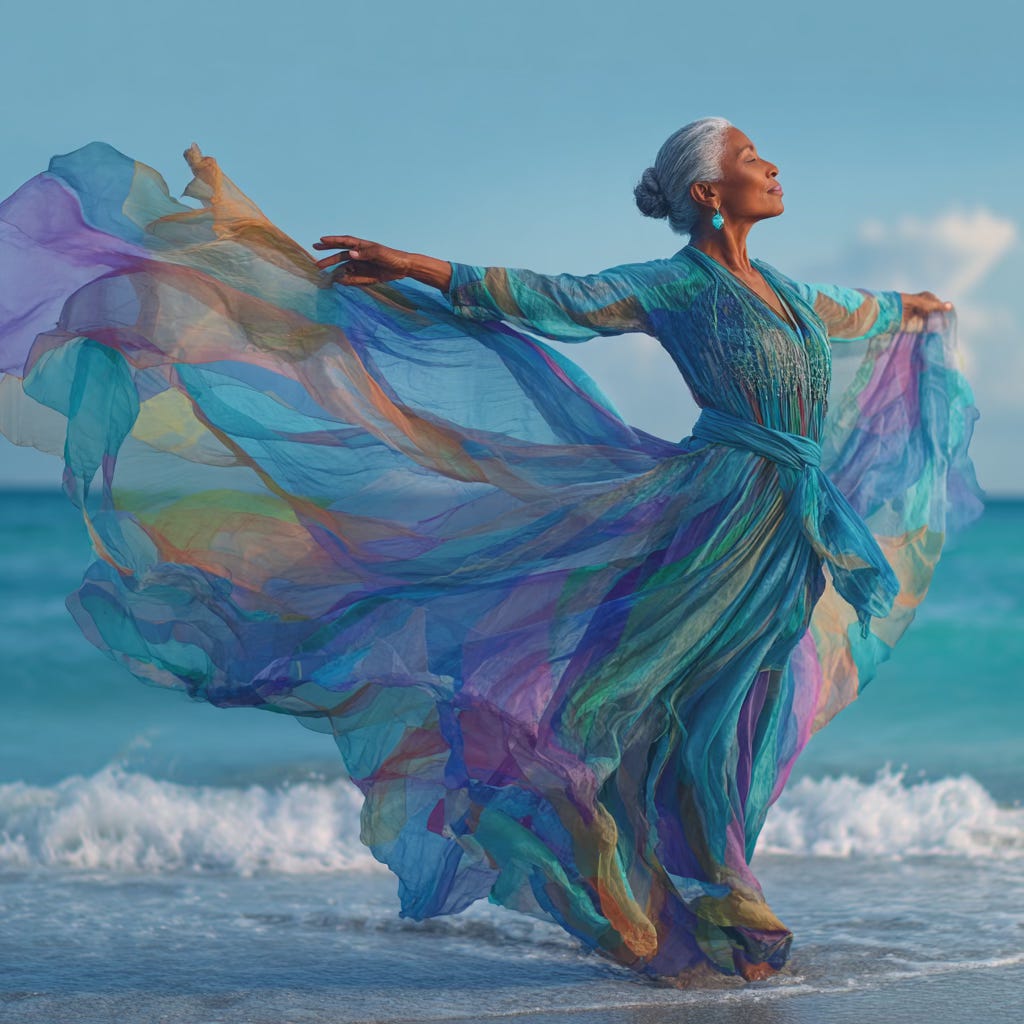
I am turning seventy this year, and I find myself considering, with more tenderness than conflict, how I now relate to the erotic in my life. I have lived solo for many years, and in that solitude, with many flourishing emotional connections, I have come to know aliveness on many levels—intellectual, creative, spiritual, sensory, emotional. Yet beneath all the names we give these dimensions of being, there is still the woman inside me who is unmistakably sensual, still responsive, still quietly attuned to what stirs, warms, touches, and opens her.
She is not always visible to others. In fact, she may be almost entirely unrecognized by the world around her, which is quick to assign older women to categories that are tidy, useful, dignified, wise, even radiant—but rarely erotic. And yet she is here. She walks through the world with a living openness to beauty, atmosphere, texture, music, language, and the subtle electricity of what resonates. She is not organized around display. She is not asking to be chosen. She is not performing youth. She is simply still alive in her senses, and aware that this aliveness matters.
That recognition feels important to me because it enlarges the meaning of the erotic beyond the cramped definitions we have inherited. It reminds me that the erotic does not vanish simply because a woman is older, living alone, or no longer moving inside the usual scripts of romance, coupledom, or desirability. It changes form. It becomes more interior, perhaps more sovereign, more spacious, more diffused through the textures of ordinary life. But it does not disappear. If anything, it may become more truthful, because it is less entangled with performance and more rooted in presence.
The Erotic Has Been Made Too Small
So when I speak here of Erotic Aliveness, I am not speaking of something abstract, nor of something reserved for the young, the partnered, or the visibly desired. I am speaking of the continuing life within a woman who remains sensate, receptive, imaginative, and warmed by what touches her deeply. I am speaking of the part of us that does not go numb simply because the culture stops looking for her. I am speaking of a form of inner vividness that can remain, and even deepen, long after the world assumes that chapter has closed.
We have made the erotic far too small, reducing it to sex, youth, seduction, desirability, romance, and the gaze of another.
The word itself has been narrowed until it seems to belong only to certain bodies, certain ages, certain moods, certain rooms, certain kinds of women. But eros is older than all of that.
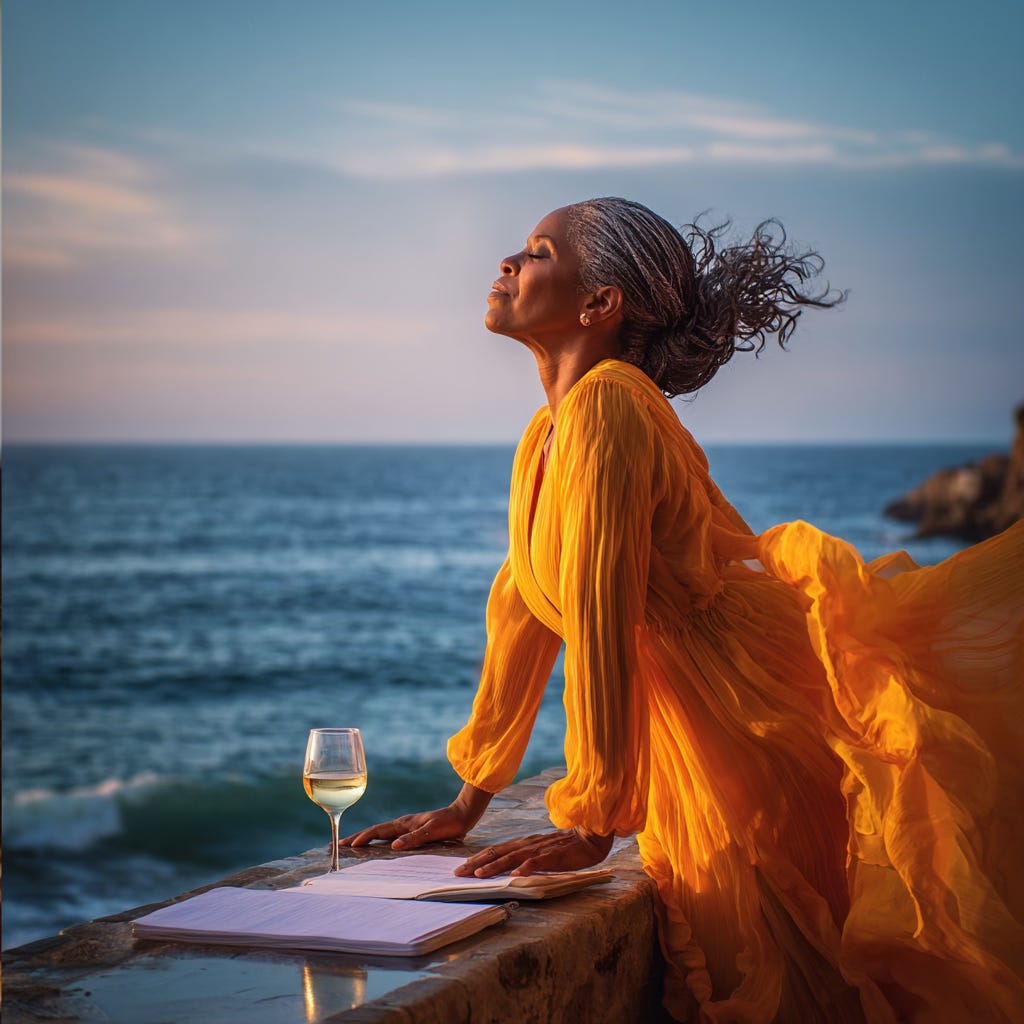
It is not simply sexual energy. It is life-force—the current beneath creation, appetite, pleasure, beauty, movement, imagination, intimacy, and becoming.
It is what draws us toward what awakens us: music that enters the body before it becomes thought, a color that arrests us, a scent that opens memory, a touch that restores presence, or a sentence that feels truer than the life we are currently living.
That is why Erotic Aliveness is not, at heart, about being desired. It is about being inhabited. It’s the pleasure of being fully inside your own skin after years of treating the body as a project, a problem, a disappointment, a credential, a burden, or an afterthought. It is the recognition that the body is not merely something to manage. It’s an instrument of perception. It knows where life is opening and where it is contracting. It also knows when peace is real and when it is only resignation wearing a spiritual vocabulary.
Erotic Aliveness asks a different question than desirability.
Desirability asks, Am I wanted? Erotic Aliveness asks, Am I awake?
That distinction changes almost everything.
So many women have been trained to experience themselves from the outside in. We learn to watch the body before we inhabit it, to evaluate the face, the shape, the hair, the age, the clothes, the appetite, the voice, the laugh, and the needs. We learn how to be pleasing, how to be composed, how to be admirable, how to become easy to love, easy to praise, and easy to manage. Before long, many women have mastered the art of appearing whole while living at a distance from themselves.
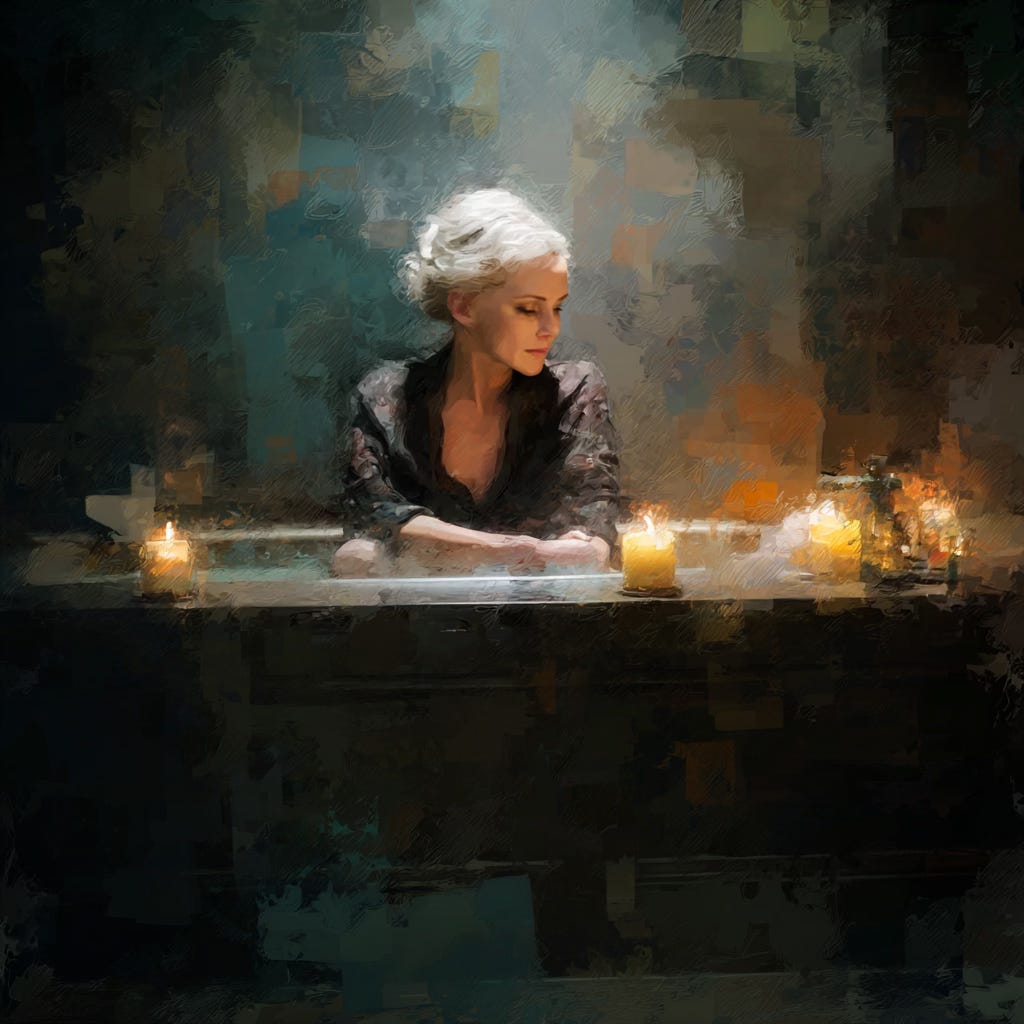
A woman can disappear from herself without looking lost to anyone else. She may still function beautifully. She may lead meetings, host holidays, answer emails, remember birthdays, pay bills, care for others, keep promises, dress well, offer insight, and carry entire ecosystems of responsibility inside her nervous system. Her life may look intact, even enviable. Yet somewhere beneath the competence, something has gone dim. Not dead. Not gone. Simply driven underground.
It goes underground for reasons that are rarely trivial. Shame can send it there. Grief can send it there. Exhaustion can send it there. Disappointment, caregiving, respectability, self-surveillance, and the long habit of distrusting one’s own hunger can all bury the current. Women are taught, in ways both explicit and exquisitely subtle, not to want too much, not to need too much, not to feel too much, not to reveal too much, not to be too sensual, too intense, too pleased with themselves, too free. Be beautiful, but not vain. Be strong, but not difficult. Be giving, but not depleted. Be spiritual, but never embodied enough to trouble the room.
This is how the erotic becomes exiled. Not always through catastrophe. Often through usefulness. Through politeness. Through becoming the one who understands, the one who adjusts, and the one who can be counted on not to make too much of her own life. A woman can become so fluent in restraint that the body forgets it was once a place of undulating music.

And yet the erotic does not disappear. It just waits. It waits in the sudden ache when a song finds the exact room inside you. It waits in warm water on the skin, in the shimmering twilight hour at the window, in the sentence you almost write and then censor, and in the dress you call “too much” even as your hand keeps returning to the fabric. It waits in a meal eaten slowly, in a candle lit for no occasion, and in the private heat of a thought you don’t explain to anyone.
Radiance is usually imagined as light—something visible, glowing, recognizable. But radiance is not only light. It’s warmth, magnetism, presence. A woman doesn’t radiate because she has arranged herself perfectly for the world. She radiates when she is less divided from herself. This is why Erotic Aliveness makes sense as the crown of the Radiance Codes: because radiance that never enters the body remains an idea. A beautiful idea, perhaps. A spiritual idea. But still an idea.
Radiance Descending into the Body
Erotic Aliveness is radiance descending into flesh. Into breath, skin, appetite, movement, voice, gaze, instinct. Into the no that has waited too long. Into the “yes!” that no longer wishes to apologize for itself. It is the soul’s current moving through the body, and when that current returns, a woman’s life begins to feel less theoretical. She is no longer speaking only from insight. She is speaking from inhabitation.
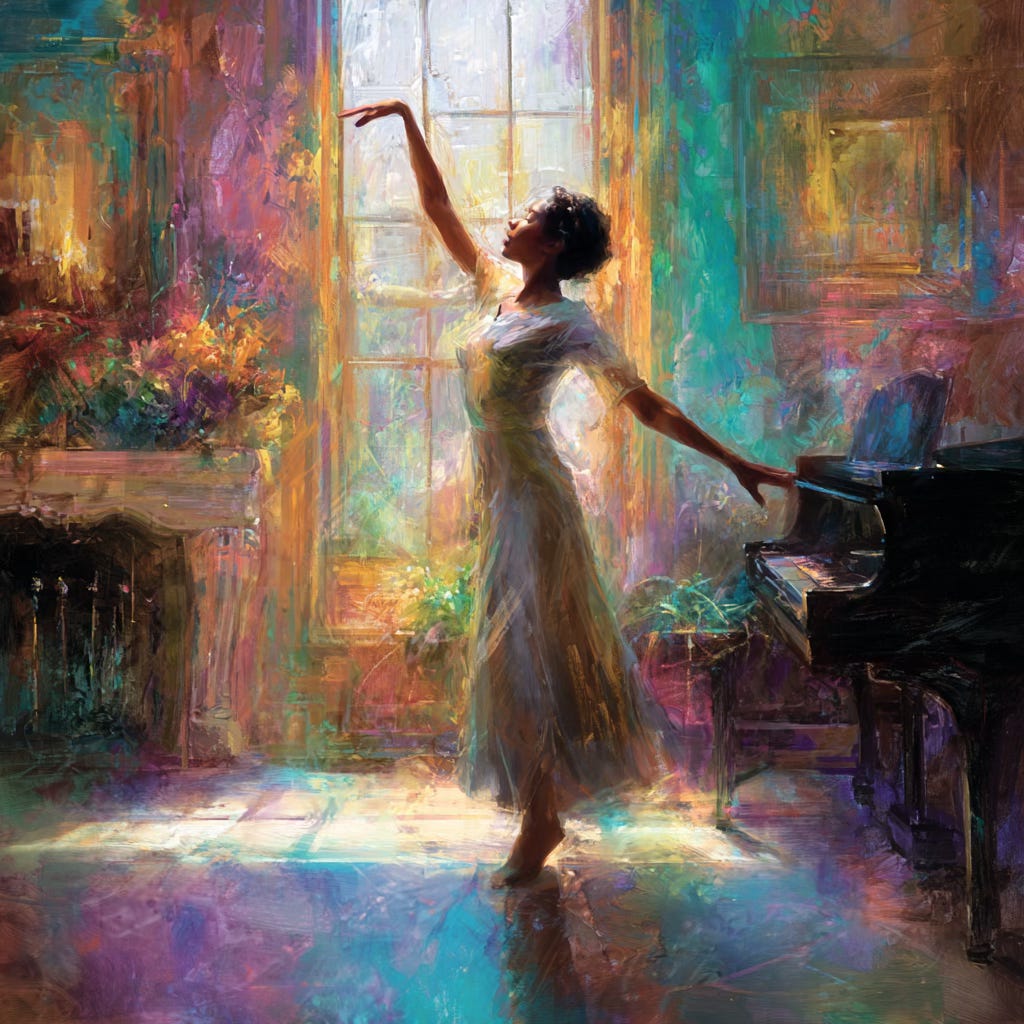
For mature women especially, this reclamation carries a particular force. One of the great thefts from women is the suggestion that eros belongs to youth. Yet youth often performs what maturity can finally inhabit. A woman who has lived, lost, chosen, endured, grieved, awakened, and begun again may come to eros with a depth her younger self could not yet hold. She may no longer confuse attention with intimacy, chemistry with devotion, or longing with love. She may find that her erotic life is not over at all; it has simply changed kingdoms.
The Mature Woman and the Solo Life
What returns may be subtler, but it is often more sovereign. Less organized around conquest, proof, comparison, or performance. More attuned to texture, honesty, tenderness, imagination, and truth. This matters profoundly for women flying solo, because Erotic Aliveness does not require a lover. It may be shared with a lover, intensified by a lover, witnessed by a lover. But it is not created by another person. It is not bestowed. It does not come into being only when someone else finds you desirable.
The Erotic Life of the Imagination
Nor is it confined to what is literally present in the room. The erotic also lives in the faculty of imagination—in the inward freedom to dream, to wander, to feel toward what is pleasurable, beautiful, moving, and deeply desired without immediately subjecting that experience to conformity, usefulness, morality, or permission. The imaginal life matters here. It allows a woman to explore attraction, longing, beauty, tenderness, mystery, and delight in a realm that is not fenced in by other people’s expectations or by the stale architecture of what she has been told is acceptable.
It allows a woman to romance and elevate herself.
This is not fantasy as escape from life, but imagination as an organ of aliveness. Through it, all of the senses may still engage. The mind sees. The skin responds. The ear hears tone and atmosphere. The body warms to mood, image, rhythm, and possibility. A woman may discover that what is pleasurable and desirable to her is far more expansive than the narrow scripts she inherited. She may allow herself to dream what she loves, to imagine what draws her, to sense her way toward beauty and resonance without needing to turn every inner experience into action, explanation, or apology.

This kind of permission is quietly emancipatory. It restores an interior spaciousness that many women lose under the pressure of being practical, respectable, contained, and legible. It allows the erotic to breathe without demanding performance. It honors the truth that desire does not have to be publicly enacted in order to be real. Sometimes it is enough that it is felt, welcomed, explored, and known.
Your eros belongs to you.
That is a radical thing for many women to remember. A woman may be celibate and deeply erotic. She may be partnered and far from her eros. She may be grieving, healing, aging, rebuilding, resting, or living alone, and still be a woman of pulse, mystery, appetite, sensual intelligence, and fire.
The erotic is not proof that someone wants you. It is evidence that life still moves through you.
And once that current begins to move again, it restores more than pleasure. It restores discernment. Your eros knows the difference between peace and numbness, devotion and depletion, generosity and self-abandonment, patience and paralysis, sacred solitude and emotional exile. It recognizes the difference between a life that genuinely protects your nervous system and one that has quietly become too small for your soul.
When Aliveness Becomes Discernment
This is where Erotic Aliveness becomes a doorway into Emancipation. Once a woman begins to feel her life-force again, she can no longer comfortably inhabit the places that require her absence. She notices the rooms where her body tightens, the conversations that flatten her, the roles that keep her useful but unseen, the loyalties that demand disappearance, the routines that preserve order while starving wonder. She begins to see that some of her old agreements were made by a version of herself who did not yet know she was allowed to want.

Erotic Aliveness is not indulgence. It is intelligence. It tells the truth through sensation before the mind has assembled its defense. It glows around what is alive. It goes quiet around what is false. That does not mean we follow every impulse or romanticize desire or confuse aliveness with chaos. The erotic, in its deepest form, is not recklessness. It is intimacy with the pulse of life. It is the capacity to feel what is real without immediately suppressing it, explaining it away, moralizing it, or handing it over to someone else for approval.
Returning Through the Small Door
To reclaim Erotic Aliveness, we often need to begin gently. Not with reinvention as performance. Not with pressure to become more glamorous, more seductive, more visibly liberated. Begin instead with sensation. What feels beautiful against your skin? What music changes your breathing? What scent returns you to yourself? What color makes your eyes linger? What food asks you to slow down? What movement lets the body speak before the mind edits it? What sentence have you been afraid to write? What desire have you made so reasonable that it can no longer stay alive?
Begin with one thing that is not for productivity, self-improvement, seduction, service, or display. Light the candle before the work is done. Wear the earrings on an ordinary afternoon. Put on the song and let your shoulders remember. Drink from the beautiful glass. Walk without counting the steps. Let the robe, the oil, the scarf, the poem, the lipstick, the bath, the silence, the open window, the handwritten page become a small altar of return. These things are not trivial. The body often comes back through the small door.
Pleasure does not need to be extravagant to be holy. It only needs to be received.
There is a kind of woman who has spent years becoming wise, capable, generous, spiritually aware, and strong. She has survived. She has adapted. She has made meaning from what did not arrive gently. She has learned how to carry what others could not see. But now another initiation arrives—not the initiation of endurance, but the initiation of aliveness. Can she allow life to touch her again without needing to earn it? Can she feel beauty without making it useful? Can she want without shame? Can she rest without guilt? Can she inhabit her body without apologizing for its history? Can she allow pleasure to belong to her wisdom?
The Next Door Opens
Erotic Aliveness is not a luxury. It is not decoration, youth, performance, seduction, or permission from another body. It is the holy evidence that you are still here: still warm, still sensing, still imagining, still becoming. It is your radiance descending into flesh, your sovereignty returning through sensation, your life-force gathering itself from all the place it was scattered, shamed, managed, silenced, or made merely useful.
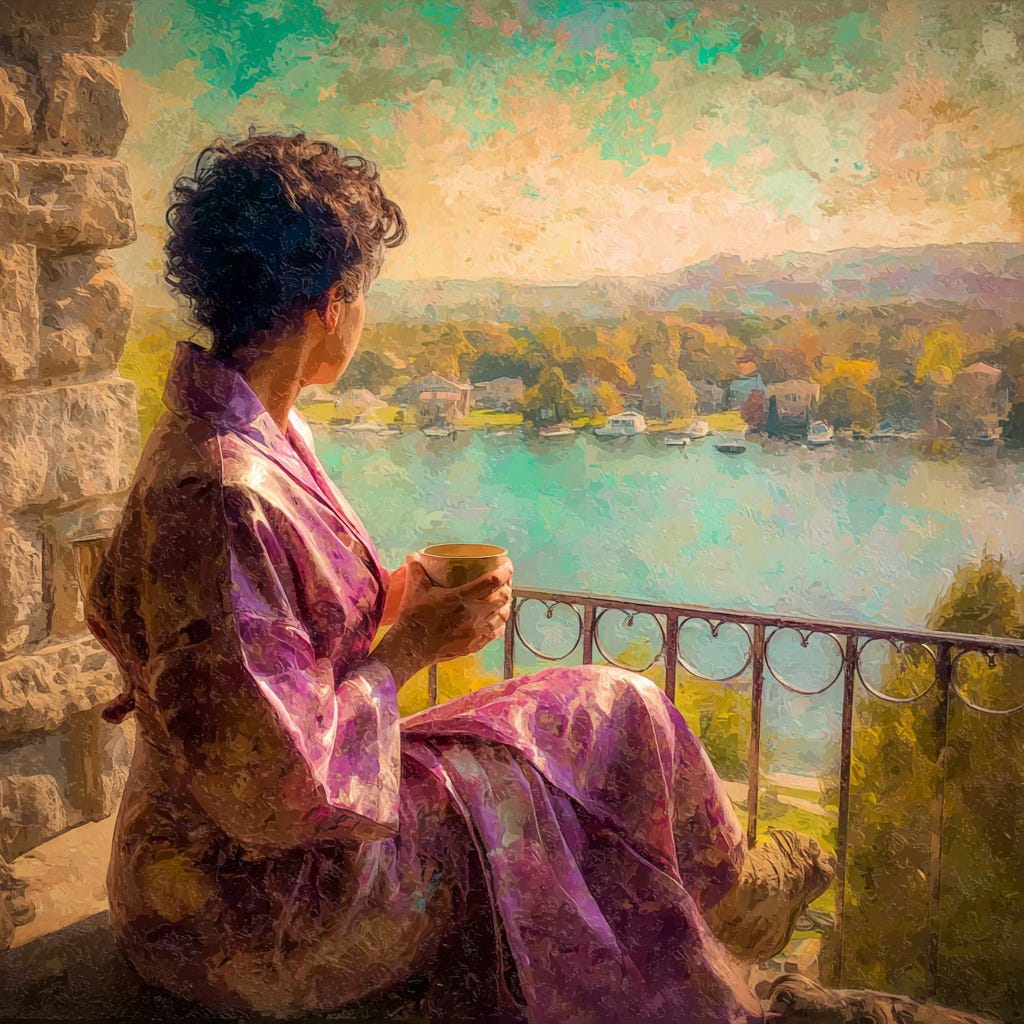
And once that current begins to move again, a woman understands something she may have forgotten: she was never meant merely to survive herself. She was meant to feel her life.
This is where radiance becomes emancipation.
This is where the next door opens. The Emancipation Codes are coming!
Love,
Angelique
If you’d like to spend more time with my work, you’re welcome to explore earlier pieces in this space, including the Emergence Codes and the Radiance Codes, and my “Living Out Loud” series. Click on the image below:

I’m really glad you’re here.
How do you FLOW toward meaning and purpose?
Do you come alive mostly as a Helper-Enlightener, Dynamo-Liberator, Creator-Enterpriser, aScholar-Scientist, Aesthetic-Harmonizer, Idealist-Devotee or Manager-Reformer? Find out and take the EnteleKeys Reveal here.

Check out my new book: Unlock Your Potential with the EnteleKeys and take the free EnteleKeys Reveal assessment.
Those are your colors. Stunning
This is so inspiring Angelique. I think a book wants to be written. 💋