

I Honor My Body’s Need for Safety Before Strength, and Presence Before Performance
Radiance Code 10: When Exercise Feels Heavy or Avoidant, First Reclaim Body Presence and Trust


I’ve been thinking a lot lately about exercise — not how to do it “better,” not how to optimize it, but why it can feel so surprisingly hard to begin.
For most of my adult life, I had a morning exercise routine. Before work, before the day took hold, I moved, stretched and felt the muscles in my body. I loved the feeling of being in touch with it — of inhabiting it fully — of literally bending it to my will. As a teenager, I took ballet lessons, and I remember the deepening relationship that created. The way the body learns. The way it remembers. The quiet confidence that comes from knowing how you move in space.
Somewhere along the way — and especially since retirement and the pandemic — that rhythm fell away. And it hasn’t been easy to reclaim.
I feel it now in very tangible ways: loss of muscle tone, shallow breathing, sluggishness, clumsiness, and a worsening sense of balance. I feel it in the stiffness, in the aches that come with aging, in the way some movements simply hurt. Sometimes exercise hurts enough to stop me in my tracks.
And the irony? I’m well-equipped. I have tons of exercise aids and equipment — some neatly stored in one room, others scattered around the house in places I frequent. I have a vast library of exercise videos. I have a gym membership that goes largely unused. I’ve tried trainers. I’ve made plans. And still, I find myself oddly paralyzed.
I know I’m not alone in this. I’ve encountered this same heaviness in conversations with other women — especially women in midlife and beyond — who feel the quiet burden of trying to exercise. We know it’s important. We know it matters for aging well, for balance, for bone density, for vitality, for mental health. And yet, knowing doesn’t translate into doing.
When we don’t act on what we know is good for us, we tend to turn on ourselves. We feel bad. Ashamed. Weak-willed. As if there is some moral failing at play.
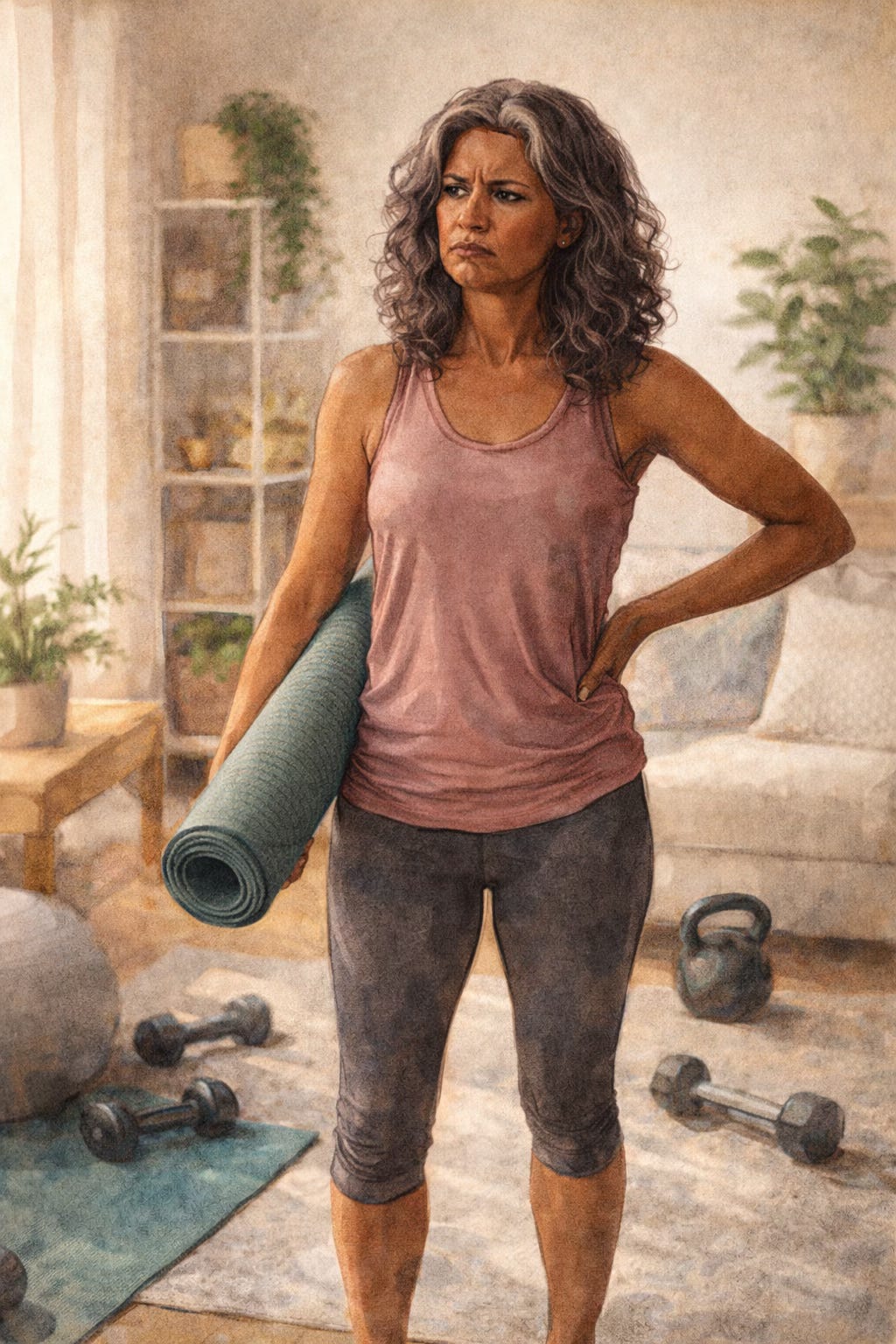
But what if that story is wrong?
What if what we’re experiencing isn’t laziness, lack of discipline, or even resistance — but something far more human, far more embodied, and far more compassionate once understood? What if we need a whole new reframe?
Akrasia: When Knowing Isn’t Enough
There’s an ancient word for this experience: akrasia.
Akrasia refers to acting against one’s better knowledge — knowing what would be good for you and still not doing it. Philosophers have wrestled with this concept for centuries precisely because it happens most often to thoughtful, values-driven people.
Akrasia isn’t a failure of intelligence. It isn’t a failure of character. It’s a conflict — an internal standoff between different parts of the system.
What’s rarely discussed, though, is the emotional residue of akrasia. When we repeatedly fail to do what we believe we “should,” we accumulate self-blame. We lose trust in ourselves. Exercise becomes morally loaded. Each non-action reinforces a quiet story: What’s wrong with me?
But akrasia is often not a refusal. It’s a signal.
It tells us that something beneath the surface is no longer aligned.
What We Actually Lost: Proprioception
Here’s where the conversation shifts.
What I’ve come to realize is that what made exercise natural for me in the past wasn’t discipline or willpower. It was body memory. The body itself initiated movement. I didn’t have to convince myself. I moved because I felt myself.
There’s a word for this internal sense: proprioception.
Proprioception is the body’s awareness of itself — its internal map. It’s how you know where your limbs are without looking, how you maintain balance, how much effort a movement requires, how you orient yourself in space. When proprioception is strong, movement feels fluid and confident. You feel at home in your body.
When proprioception diminishes, the body can feel unfamiliar. Awkward. Heavy. Uncertain. Even unsafe.
And proprioception does diminish — especially with age, stress, pain, and long periods of reduced movement. Severe breaks in routine, like those many of us experienced during the pandemic, disrupt it profoundly. When our daily rhythms dissolved, so did some of the body’s quiet internal calibrations.
So when we say, “I can’t get myself to exercise,” what we may actually be saying is:” I don’t quite know where I am in my body anymore. A circuit of connection between me and my body has broken and I feel lost.”
That’s not a moral failure. It’s an orientation issue.

Safety, Threat, and the Nervous System
Here’s the piece that removes shame entirely.
When proprioception weakens, the nervous system becomes cautious. Movement — especially unfamiliar or demanding movement — can register as potential threat. Pain, imbalance, breathlessness, or uncertainty signal risk.
And when the body perceives risk, it does exactly what it’s designed to do: it avoids.
This is why willpower fails so reliably in this domain. You can’t reason a nervous system into feeling safe. You can’t shame a body into trust. What looks like resistance is often self-protection.
Akrasia, in this context, is not defiance. It’s wisdom — albeit misunderstood.
The body isn’t refusing movement. It’s waiting for safety.
Body Presence: The Way Back
This brings me to what I now think of as Body Presence.
Body Presence isn’t exercise. It isn’t performance. It isn’t achievement. It’s the felt experience of being inhabited — of living inside your body rather than managing it from above.
When Body Presence is strong, movement arises naturally. The body remembers itself. Proprioception rebuilds. Confidence precedes effort.
When Body Presence is thin, the mind tries to compensate. We plan. We force. We compare. And the body quietly retreats.
The way back, I’m now learning, is not through more demanding programs or louder inner commands — but through gentle practices that restore orientation, rhythm, and trust.
This is why practices like Tai Chi, yoga, gentle stretching, flow-based movement (e.g. Essentrics), and even dance feel so different. They don’t ask the body to perform. They invite it to arrive.

They emphasize continuity over intensity. Sensation over outcome. Safety over strain. They say, gently: You are welcome here.
And the remarkable thing is that when Body Presence returns, strength follows. Balance improves. Breath deepens. Vitality reemerges — not because we forced it, but because we made space for it. Then we find we want to do more as the body attunes and whispers to us with encouragement…including more challenging movement, resistance and equipment. The partnership between ourselves and our bodies becomes restored and stronger.
Reframing Self-Care and Radiance
If we understand this, the story changes. Exercise is no longer something we fail at. It becomes a relationship we are rebuilding.
Radiance, then, doesn’t come from proving vitality or power-exercising into compliance. It comes from coherence — from being at home in ourselves. The body is not resistant. It is responsive. And it is always extending an invitation to reconnect.
My body is relearning and reconnecting…with me.
Gentle Practices for Returning to Body Presence
Rather than prescriptions, think of these as doorways:
Begin with small, pleasant movements — not full workouts. Five minutes of gentle flow is enough to signal safety.
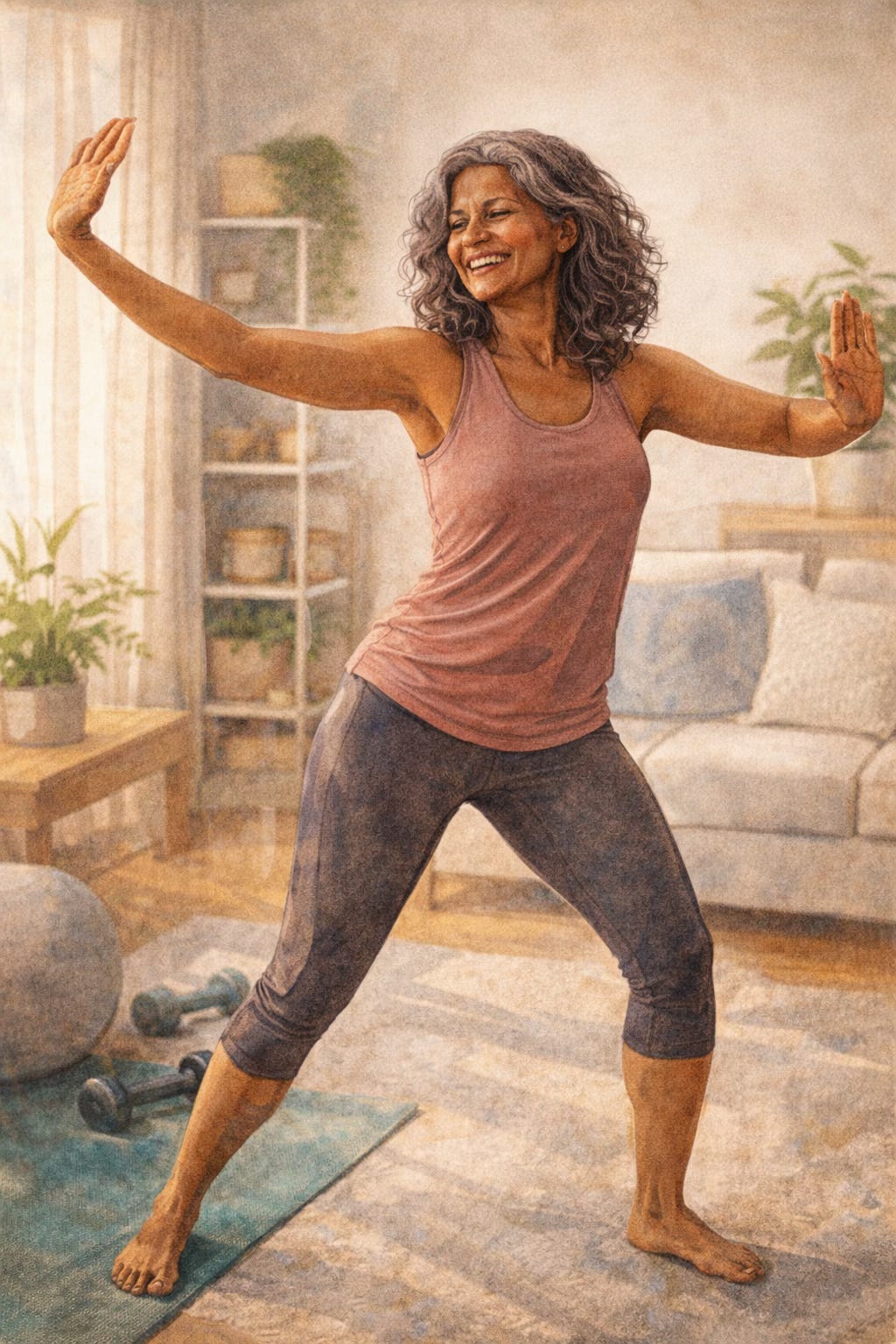
Choose practices that emphasize continuous motion rather than exertion.
Move until it feels good, not until it feels productive.
Let sensation — not metrics — guide you.
Trust that strength will come later. Orientation and connection comes first.
Affirmations for Releasing Shame and Rebuilding Trust
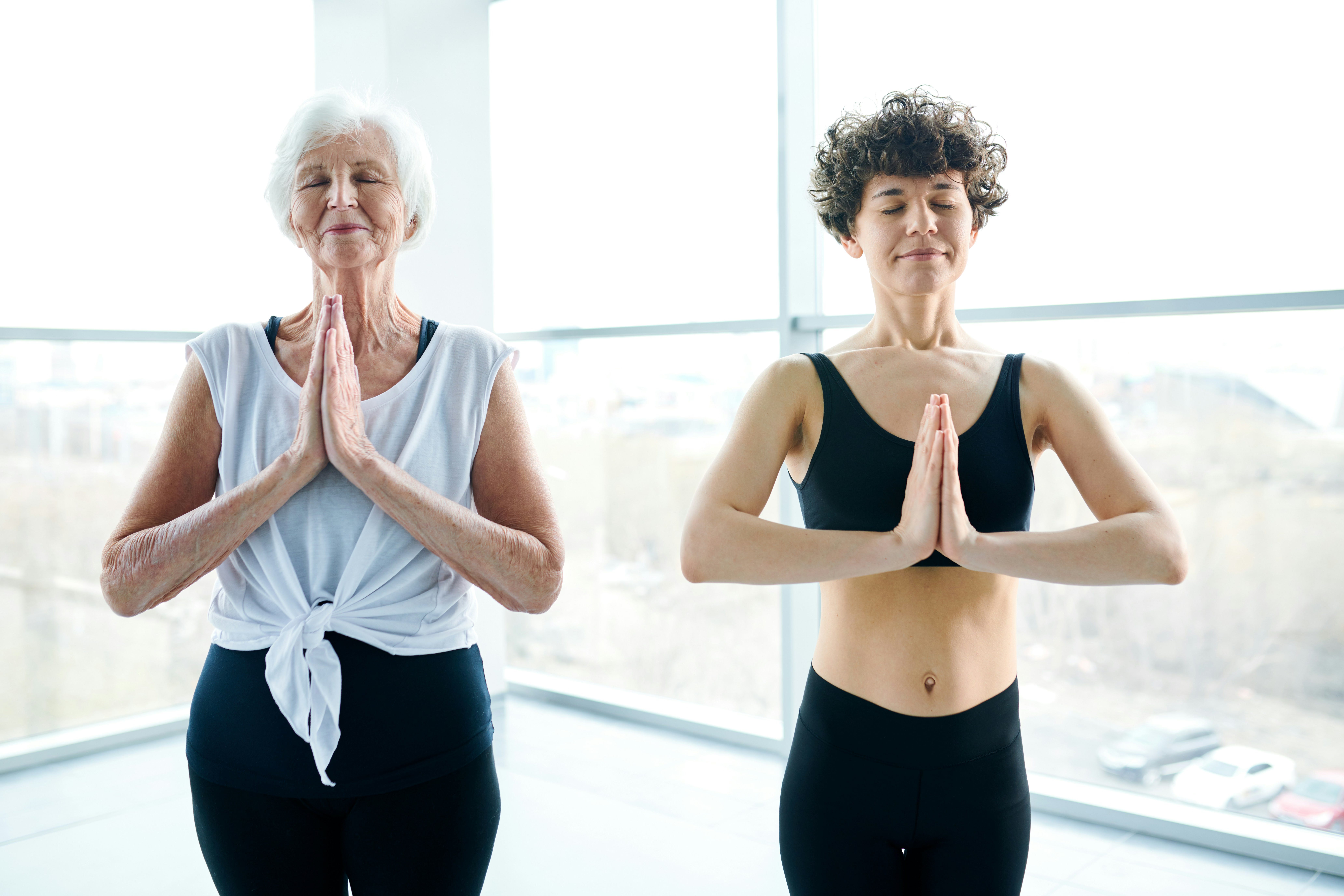
You might try holding these softly, not as commands but as reminders:
My body is not resisting me; it is protecting me.
I don’t need to force movement. I need to restore presence.
Safety precedes strength.
Small movements are meaningful movements.
My body remembers more than I think.
I am rebuilding a relationship, not correcting a failure.
Perhaps the struggle with exercise is not about discipline at all. Perhaps it’s about losing our sense of ourselves in our bodies — and needing a gentler, wiser way back.
The invitation is always there. And it begins not with doing more, but with listening again.
Flow with me in this journey…
With Blessings and Love,
Angelique
For more about the Emergence Codes and the Radiance Codes, I welcome you to explore prior posts. Thank you for visiting!
*Photos by Unsplash