

The Interrupted Muse: When a Woman’s Radiance Is Dimmed or Denied
Radiance Code 15: I Stay Conscious of Muse Archetypes That Inspire and Protect My Own Radiance from Interruption

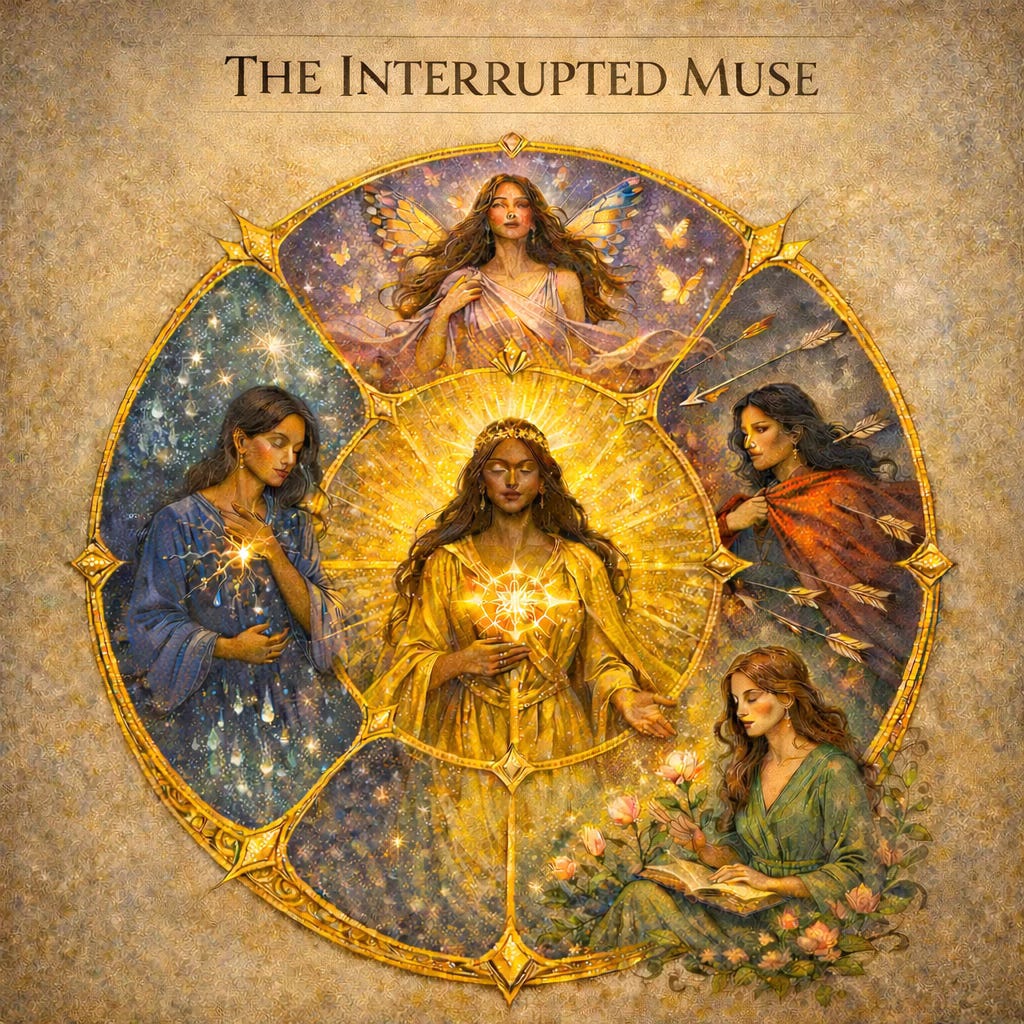
There are women whose light arrives in the world before the world quite knows how to receive it.
Their presence stirs something recognizable and mysterious at once — beauty, brilliance, charisma, emotional depth, and/or creative force. We feel it immediately. We lean toward it. We remember them.
Yet, the lives of such women often reveal a pattern that is both luminous and sobering. The world may adore them and feel inspired by them. But it does not always know how to regard them enough to protect their right to live sovereign and protected from harm. And sometimes it does not know how to let them simply live.
Across generations, many women have lived lives in which their radiance was not extinguished, but complicated — delayed, wounded, scrutinized, targeted, or redirected by forces larger than themselves. Over time I began to notice this pattern not only in the lives of famous women, but in the quieter lives around us. The phenomenon reveals something psychological and sociological about human culture itself.
Radiant women have always stirred powerful responses in the collective psyche. They awaken admiration, longing, inspiration, erotic fascination, and sometimes deep discomfort. A woman who embodies beauty, voice, charisma, intelligence, or artistic power becomes more than an individual — she becomes a symbol onto which a society projects its desires and anxieties.
Some people respond to that radiance with reverence and support. Others respond with entitlement, intrusion, resentment, or control. This tension has followed luminous women across centuries. The same qualities that inspire devotion can also provoke attempts to diminish, capture, silence, or redirect their light.
Understanding these patterns allows us not only to remember these women with greater depth, but also to recognize how the archetypes continue to operate in our own lives.
I think of it as The Interrupted Muse.
The interruption does not always look the same.
Sometimes brilliance emerges from deep emotional wounds.
Sometimes fascination turns a woman into something the world tries to capture and keep under glass.
Sometimes radiance provokes hostility or obsession.
And sometimes a woman herself learns to postpone her fuller expression in order to meet the needs of others.
Yet the stories of these women also offer something else.
They offer guidance.
If we listen carefully, their lives teach us how fragile radiance can be — and how powerful it becomes when a woman ultimately claims it as her own.
The First Muse I Knew
Before I recognized this pattern in the lives of public figures, I saw it in my own home.
In my mother.
She possessed a natural radiance — the kind that reveals itself not only in beauty, but in intelligence, warmth, humor, and the alluring magnetism of someone who makes others feel more alive in their presence.
My mother was also an incredible professional vocalist and stage actress. Before meeting my father, she carried the lead of the national Porgy & Bess as “Bess” across the country and across the sea to Europe, and was a popular nightclub songbird in some of the best spots in the country. Incredibly charismatic, she had a dazzling smile and a statuesque body, from which long legs flowed endlessly. People were drawn to her. Heads turned as she walked down a busy street. There was just something about her. As the young girl holding her hand, I knew it too.
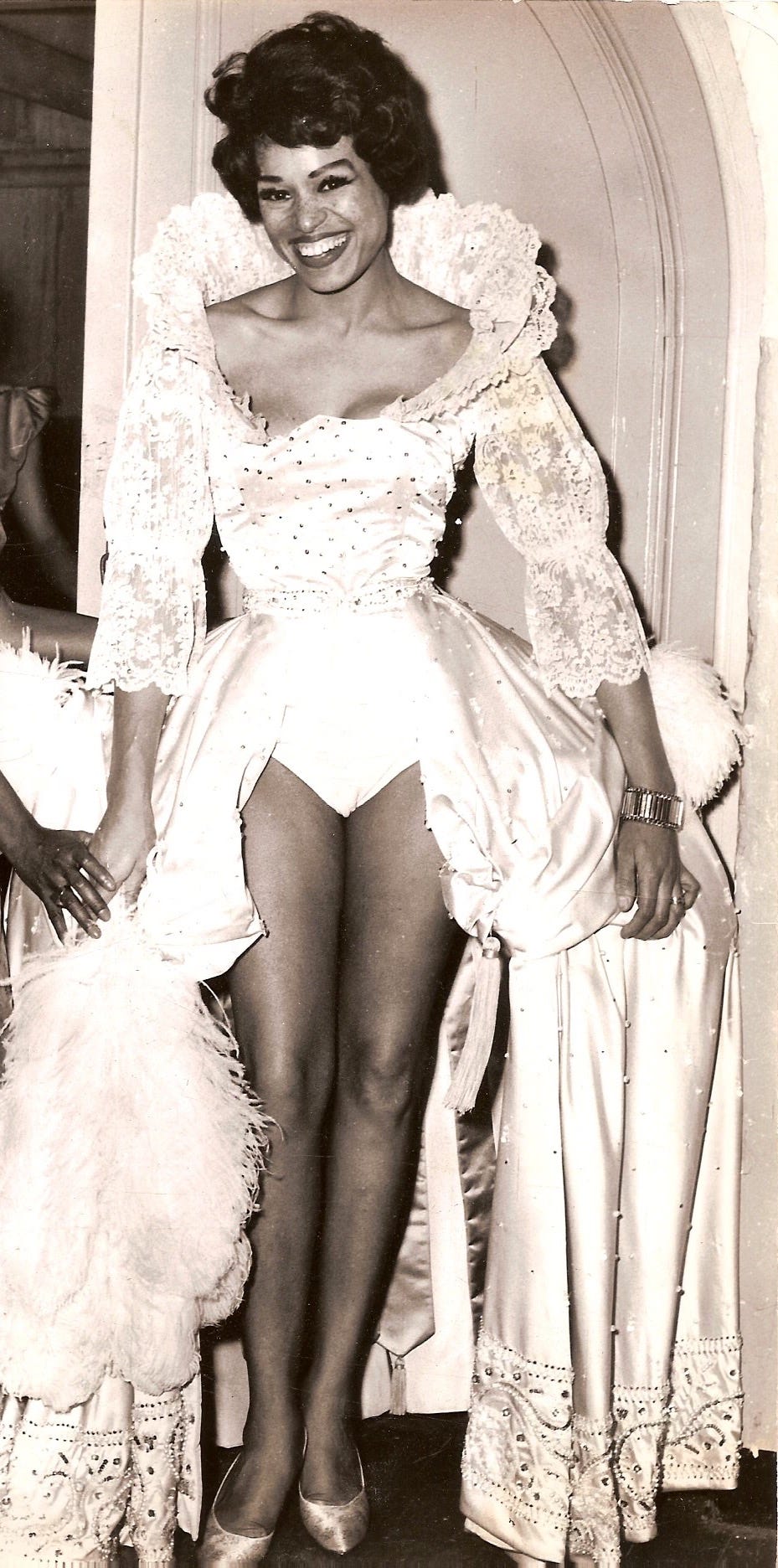
Yet like many women of her generation, much of her life unfolded within structures that quietly asked her to contain that radiance rather than expand it. In the middle of her ascent, she got married. Within a year, pregnancy. Attempts to continue her career (another show, a movie, night club gigs) and balance motherhood were increasingly stressful and unsettling, leading to emotional fragility, and ultimately, mental illness. My father supported and encouraged her career and her mother cared for us when she traveled to perform. Still, it was so hard.
Her gifts did not disappear. They were still within her, building and searching for release. But they were redirected into the duties of family, marriage, and managing a household led by a journalist father who worked hard and traveled widely to secure our future. She died suddenly as I turned 14, caught in the middle of a mental collapse and pneumonia — and at the causal effect of hospital negligence.
As a child, I did not yet see the deeper story beneath her life and those years. But as I grew older, I began to notice something in her aching absence.
Her light was still there…growing in me.
It appeared in memory flashes and I saw it in the many pictures I preserved — in the way she lit up people, in moments of humor and insight, in the subtle wisdom that revealed a fuller woman living beneath the roles she had been asked to play. And slowly I realized something that changed the way I saw not only my mother, but the lives of many women.
Her story was not unusual. She has and continues my Muse. While hers is a cautionary tale, it has and still inspires, and holds a lantern as I’ve journeyed through my own life. I hear her whispers that urge me on to keep expressing and fighting for my Self, no matter what.
Across generations, countless women have lived lives where their brilliance was partially hidden, postponed, or quietly redirected — not because the light was absent, but because the world around them did not yet know how to make space for it.
The Archetypes of the Interrupted Muse
These archetypes are not rigid identities but recurring patterns. A woman may encounter several of them across the arc of her life before ultimately arriving at sovereignty.
The Wounded Muse
Some radiance is born alongside a wound.
In many women whose artistry or magnetism moves the world, there is an earlier fracture — something disrupted, distorted, neglected, or even abused in the formative years of life. A child who was unseen, a spirit constrained, a sensitivity exposed to forces too harsh for it. The wound rarely disappears. Instead, it becomes buried beneath talent, beauty, performance, discipline, and the relentless will to keep moving forward. It can further manifest as depression, substance abuse and self-harm.
Yet wounds that are buried do not vanish. They wait.
They surface again and again, often in the very acts through which the woman expresses herself. Each performance, each creation, each reaching outward toward the world becomes — consciously or not — an attempt to resolve an unfinished emotional cycle. A call for recognition. A longing to finally complete the story that began in pain.
Marilyn Monroe embodied this paradox. Beneath the luminous icon lived a woman whose childhood instability left a lifelong search for safety, love, and intellectual recognition. Her performances carried both seduction and longing — the brilliance of someone trying to be seen beyond the projection. She died tragically at the age of 36.
Phyllis Hyman possessed one of the most emotionally resonant voices in soul and jazz‑influenced R&B. Tall, elegant, and deeply expressive, she brought a sophisticated vulnerability to songs about love, longing, and resilience. Hyman’s performances carried an emotional honesty that listeners instantly recognized — the sense that she was not merely interpreting lyrics but revealing something lived. Behind the elegance, however, she struggled privately with depression and emotional turbulence that intensified under the pressures of the music industry. She died by suicide at the age of 45. Her artistry remains a testament to how profoundly a wounded heart can translate feeling into music.
Amy Winehouse burst into the global music scene with a voice that sounded both timeless and startlingly contemporary — a smoky blend of jazz phrasing, soul power, and lyrical honesty. Her album Back to Black became one of the defining records of the 2000s, celebrated for its wit, vulnerability, and musical sophistication.

Winehouse’s songwriting exposed heartbreak, addiction, and longing with rare candor. That fearless honesty was central to her brilliance, yet the media often consumed her struggles as spectacle rather than recognizing the fragile human being inside the public story. She died at age 27 due to alcohol poisoning.
Whitney Houston emerged in the 1980s with a voice of almost unmatched clarity, power, and emotional precision. Trained in gospel tradition and guided by extraordinary musical instinct, she became one of the most successful singers in modern history. Songs like “I Will Always Love You” showcased a vocal range and control that seemed nearly supernatural. Yet Houston also lived under immense commercial pressure, intense media scrutiny, a failed marriage and the personal struggles that accompany global fame. A documentary suggested she was a victim of sexual abuse by a family relative. Her short life reminds us that extraordinary gifts can coexist with profound vulnerability.
The Wounded Muse teaches us that sensitivity is not weakness. It is often the very soil from which transformative art grows.
But it also reminds us how deeply the psyche longs for healing.
The Captured Butterfly Muse
Some women evoke fascination that feels almost mythic. Their beauty, composure, style, or emotional presence creates a gravitational pull. People sense something luminous and rare — and instead of simply appreciating it, they begin to pursue it.
The butterfly becomes the perfect metaphor. A butterfly in the wild inspires wonder. But human instinct often turns wonder into possession. We want to catch it, photograph it, examine it, hold it close, turn the glass jar to peer into it and prove that we possess something beautiful.
Modern celebrity culture magnifies this impulse dramatically. Cameras multiply. The public gaze becomes relentless. Privacy dissolves.
Diana Spencer, formerly Princess of Wales. carried a rare combination of glamour, empathy, and emotional openness. Newly married to Prince Charles, heir apparent to the British throne, Diana was a breath of fresh air, breaking the then unexciting mold of British royalty. Eventually, she provoked engendering disapprovals from the other royals themselves for the independence and charitable projects that inspired her. But the public did not simply admire her; they felt entitled to witness and judge every moment of her life. She finally freed herself from the monarchy with a divorce, and as a single mother, she began to reshape her life and make new choices. However, that same entitlement by the public continued to feed a media ecosystem of paparazzi who pursued her with astonishing intensity -- even chasing her to her death at the age of 38.

Carolyn Bessette-Kennedy radiated a different but equally compelling magnetism for the press. Her elusive, cool beauty, restraint and privacy made the public even more determined to decipher and assess her suitability to be the wife of “America’s Prince,” John F. Kennedy, Jr. The more she withdrew her permission for the harsh intrusions, the more the cameras demanded. The press then vilified her for not engaging and “playing fair” as a public figure. Eventually, she was unable to fully enjoy the marriage that precipitated their pursuit. Not even her well-intentioned, and press-proficient husband could protect her. She watched her identity as a fiercely independent and successful fashion executive who freely walked the streets of NYC with anonymous freedom, become swallowed up. She became more reclusive without reasonable recourse. We wonder what she would have done to resolve it if she had lived beyond her 33 years.
The Captured Butterfly Muse reveals a troubling social instinct: the belief that beauty and charisma create public entitlement. Yet admiration that cannot respect distance slowly becomes intrusion. With a lid on the jar, the butterfly slowly dies.
The Targeted Muse
Sometimes a woman’s rising radiance provokes something darker than fascination. It provokes targeting.
Across history, women who become visible, influential, or symbolically powerful often encounter forces that attempt to silence, diminish, or punish them. The mechanisms vary — violence, erasure, public humiliation, institutional backlash — but the psychological pattern is strikingly consistent.
When a woman expands beyond the roles assigned to her, she may inadvertently expose insecurities within the social structures around her. Some respond with admiration. Others respond with hostility.
The Targeted Muse reveals several recurring patterns.
1. The Violently Targeted Muse
In the most tragic cases, admiration turns into lethal possession.
Selena Quintanilla-Perez — known simply as Selena to millions of fans — was a Mexican‑American singer who transformed Tejano music in the early 1990s. Charismatic, joyful, and astonishingly hardworking, she began performing as a child in her family’s band and rose to become one of the most beloved Latin artists of her generation. Selena represented a bridge between cultures: Spanish and English, tradition and pop modernity, Mexican heritage and American possibility.

To young Latina women especially, she embodied pride, ambition, and joyful self‑expression. By her early twenties she was on the cusp of global crossover success. But the same intimacy that endeared her to fans allowed a trusted associate to grow dangerously obsessed with proximity to her life. In 1995 Selena was murdered at only 23 years old — just as her career was about to expand beyond the Latin music world into global pop stardom.
Dorothy Stratten was a young Canadian woman whose luminous beauty and quiet intelligence quickly attracted attention in Hollywood. Discovered as a teenager and later named Playboy’s Playmate of the Year in 1980, she began moving beyond modeling toward acting and studying her craft. Friends described her as gentle and increasingly determined to shape a life beyond the image that first made her famous. But her rise occurred within a relationship marked by control and manipulation. When she began asserting independence, her husband’s possessiveness turned lethal. At just 20 years old she was murdered by the man who believed he owned her future.
2. The Structurally and Institutionally Suppressed Muse
Sometimes the targeting is not violent but systemic.
Instead of dramatic confrontation, the interruption happens through institutions, industries, or cultural gatekeepers that quietly restrict a woman’s opportunities, credibility, or influence once she becomes inconvenient to established power structures.
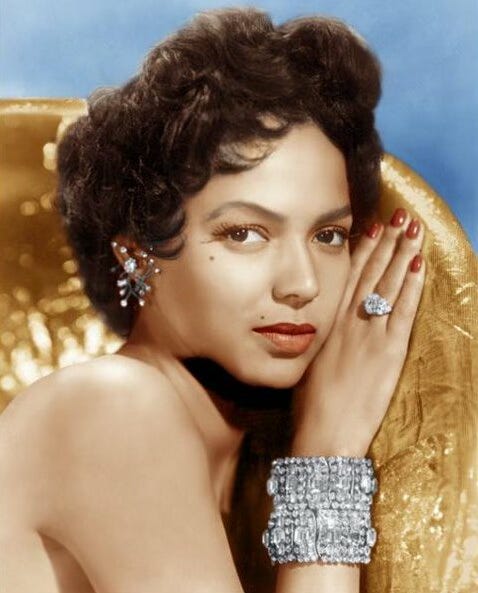
Dorothy Dandridge was one of the first Black actresses to achieve major Hollywood stardom. Elegant, talented, and breathtakingly beautiful, she became the first African-American woman nominated for the Academy Award for Best Actress for her role in Carmen Jones in 1954. Yet the same industry that celebrated her beauty simultaneously restricted her opportunities. Racist casting practices, domineering partners and studio power structures repeatedly constrained her career and financial stability. Her ascent plummeted, and she died young, at 42.
In modern times this pattern often appears through institutional backlash when women challenge powerful figures or entrenched systems.
Anita Hill offered one of the clearest examples when she testified before the United States Senate that Supreme Court nominee Clarence Thomas had sexually harassed her when he was her supervisor. Calm and precise in her testimony, she described experiences that many women immediately recognized. Yet the national spectacle quickly shifted toward scrutinizing Hill herself — her credibility, motives, and character — before an all-male Senate committee and a divided public.
Decades later, similar dynamics emerged in the entertainment industry when actresses such as Ashley Judd, Mira Sorvino, and Rose McGowan spoke about sexual misconduct by producer Harvey Weinstein. Several later described how resisting or reporting his behavior resulted in reputational attacks or quiet career sabotage.
The Structurally and Institutionally Suppressed Muse reveals how systems themselves can interrupt a woman’s radiance — not through overt violence, but through exclusion, credibility attacks, and the quiet closing of doors.
3. The Scapegoated or Vilified Muse
Another pattern appears when a woman becomes entangled with powerful men or institutions and the cultural narrative shifts blame onto her rather than examining the imbalance of power around her.
Throughout history, women connected to influential figures have often been recast as temptresses, manipulators, or moral failures in order to protect male authority. Early Christian history offers a striking example in Mary Magdalene. Historical scholarship suggests she was a respected follower and patron within Jesus’s circle, yet later traditions reframed her as a repentant prostitute — a reinterpretation that diminished her influence while reinforcing patriarchal hierarchy.
Modern culture has repeated this pattern many times.
When Monica Lewinsky became involved with President Bill Clinton while working as a young White House intern, the global scandal that followed turned her into the object of ridicule and moral condemnation. For years she became the punchline of jokes and media humiliation, while the vast imbalance of power between a young employee and the President of the United States was rarely the central narrative. Only decades later did public reflection begin to recognize how profoundly she had been scapegoated.
A more recent illustration of the Scapegoated Muse can be seen in Meghan Markle, Duchess of Sussex. When she married Prince Harry and entered the British royal family, she represented several disruptions at once — a biracial American woman, an accomplished professional actress, and a modern voice within one of the world’s most tradition-bound institutions. Very quickly, the British tabloid press began constructing a narrative that portrayed her as manipulative, demanding, or destabilizing to the royal order. Ordinary actions were reframed as transgressions, and relentless scrutiny followed nearly every public appearance. Over time the pressure grew so intense that she and Prince Harry ultimately chose to step away from royal duties altogether. Since then, she has reshaped her own narrative. Her story illustrates how modern media ecosystems can transform a woman into the symbolic focal point of cultural tensions surrounding race, gender, and institutional power.
The Scapegoated Muse reveals a deep cultural reflex: when a powerful system is threatened, the woman closest to the controversy often becomes the easiest figure onto whom blame can be projected.
These variations reveal a sobering truth. When female radiance expands into influence, autonomy, or moral courage, it can unsettle fragile hierarchies. The response is not always admiration.
Sometimes it is targeting.
The Deferred Muse
Not every interruption arrives dramatically. Sometimes a woman’s muse is simply asked to wait. For generations of women, intelligence, creativity, and leadership were quietly redirected into the essential work of sustaining families and communities.
Their gifts did not vanish. They were postponed.
Many of us saw this in our mothers or grandmothers — women whose deeper selves we only began to glimpse later in life. History also offers beautiful examples of the muse returning when life finally created space for her.
Julia Child published her first cookbook at 49, after years spent living in France and discovering a deep love for culinary craft. What might have remained a private passion instead became one of the most influential culinary careers in modern history, transforming how Americans approached cooking.

Vera Wang did not begin designing fashion until the age of forty. After working as a Vogue editor and later at Ralph Lauren, she entered the bridal fashion world when she could not find a wedding gown that matched her own vision. What began as a personal project became one of the most recognizable luxury fashion houses in the world.
Louise Hay represents another powerful Deferred Muse. After a childhood marked by poverty and trauma, she spent many years quietly studying spirituality and personal healing. Her book You Can Heal Your Life, published in her fifties, went on to become one of the most influential works in modern personal development, inspiring millions to rethink the connection between thought, emotion, and physical wellbeing. At fifty-seven she founded Hay House, building one of the most successful publishing companies devoted to spirituality and well-being and helping bring the voices of many teachers and authors in the wellness movement to a global audience.
Toni Morrison published her first novel at 39 while working as an editor and raising two children as a single mother.
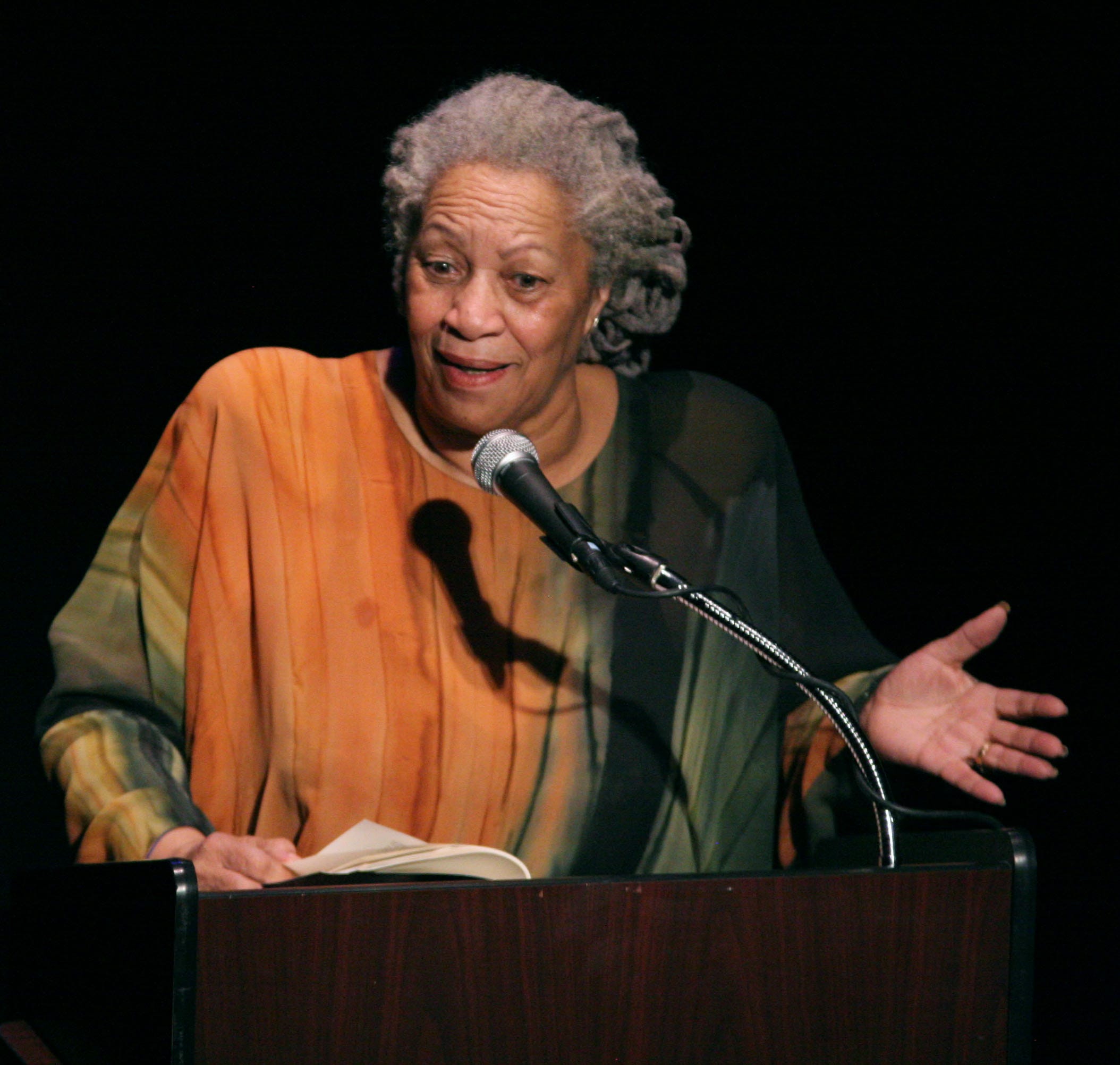
Her voice continued to deepen over decades until she received the Nobel Prize in Literature at 62, demonstrating that a woman’s most powerful creative recognition can arrive long after the world expects it.
The Deferred Muse teaches us that postponement is not always loss. Sometimes it is preparation. Sometimes it is gestation.
The Sovereign Muse
And then there are women who manage, through resilience, self‑knowledge, and strategic courage, to claim authorship of their lives.
These are the Sovereign Muses — women who refuse to remain defined by the projections, injuries, limitations, or expectations placed upon them. Their radiance matures rather than diminishes. Over time it becomes authority.
As a movie-addicted child, I was attracted to Katherine Hepburn and Bette Davis films in which they were true protagonists, maintaining their identities as strong, independent and intelligent women who could have it their way. That and the courage of my familial heritage and the other women who inspired and mentored me, imprinted me.
Elizabeth Taylor, starting from childhood, became one of the most famous actresses in the world — celebrated for extraordinary beauty and cinematic magnetism. Yet her deeper legacy lies in the way she refused to remain merely an object of admiration.

She lived boldly, loved fiercely, spoke candidly, and later used her global fame to become one of the earliest and most influential activists and philanthropist in the fight against HIV/AIDS when many public figures remained silent. Her sovereignty was not perfection; it was unapologetic presence.
Tina Turner’s story represents one of the most powerful acts of self‑reclamation in modern music history. After surviving years of abuse within her marriage and musical partnership with Ike Turner, she left with little money and rebuilt her life through sheer determination and talent. Her explosive stage performances in the 1980s were more than entertainment — they were the visible energy of a woman who had taken her life back.
Maya Angelou transformed adversity into wisdom that nourished millions. A poet, memoirist, and civil rights activist, she carried the memory of trauma, racism, and personal struggle into a voice that spoke with moral clarity and spiritual depth. Her work demonstrates how the Sovereign Muse can evolve into a guide for others.
Oprah Winfrey represents another form of sovereignty: the ability to shape culture itself. Rising from poverty, abuse and hardship, she built a media platform that encouraged introspection, emotional literacy, and personal transformation. She owned her own production company out of the gates. Her influence expanded far beyond television, turning storytelling and empathy into instruments of social impact.
Jane Goodall represents another form of sovereignty — stewardship of knowledge and moral responsibility toward the living world. Beginning her research in Tanzania in 1960, she transformed scientific understanding of chimpanzees through patient observation that revealed their complex social lives, emotional bonds, and use of tools.
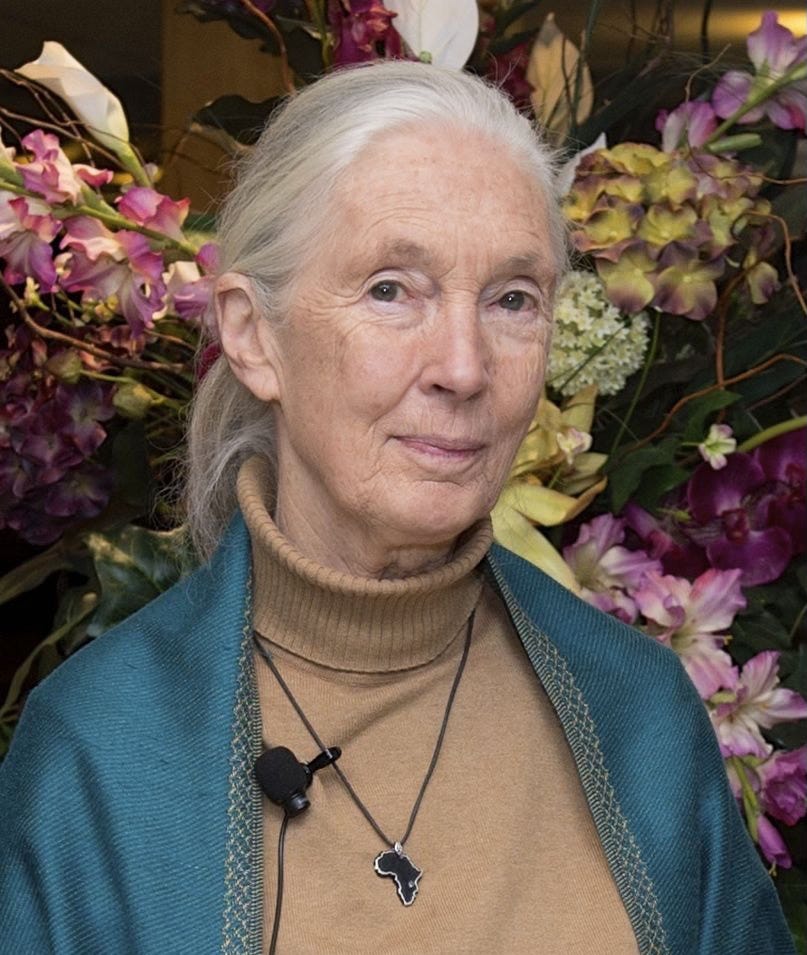
Over time she expanded her role from scientist to global advocate, founding the Jane Goodall Institute and traveling the world to encourage conservation and ecological responsibility. Her sovereignty lies in a lifetime devoted to a mission larger than herself — a quiet authority built through patience, integrity, and purpose.
Michelle Obama embodies intellectual discipline, warmth, and grounded authority. As First Lady she reshaped public expectations of the role through initiatives in education, health, and civic engagement. Her memoir Becoming was written not merely as personal storytelling but as guidance for younger generations of women navigating ambition, identity, and public life. She spoke candidly about self‑doubt, resilience, and the challenge of defining oneself beyond the expectations of others. Today she continues expanding her influence through film, podcasting, and media production, consciously shaping cultural narratives that encourage thoughtful leadership and self‑possession. She has worked consistently not to be solely defined by her husband’s ground-breaking presidency.
Taylor Swift illustrates how sovereignty is evolving in the modern creative economy. Beginning as a teenage songwriter in country music, she grew into one of the most powerful figures in global pop. Swift challenged industry norms around ownership and artistic control, famously re‑recording her early albums so that she could reclaim the rights to her work. Her career demonstrates that protecting one’s creative sovereignty can be as important as artistic talent itself.
Beyoncé represents sovereignty through visionary artistry and cultural authorship. Her albums and visual projects weave together music, history, Black identity, feminism, and performance in ways that reshape popular culture. By controlling her creative direction and production, she models what it means for a woman to command the full architecture of her artistic expression.
Rihanna offers yet another expression of the Sovereign Muse — entrepreneurial reinvention. After becoming a global music star, she expanded her influence into fashion and beauty, building companies that challenged long‑standing norms around representation and inclusivity. Her success shows how charisma and creativity can evolve into visionary business leadership.
Another quality unites these Sovereign Muses: they actively manage the narrative of their own lives. Rather than allowing the press, the public, or cultural rumor to define them, they exercise careful stewardship over what is shared and what remains private. They also thoughtfully shepherd their own self-expression and finances. Many of them are also mothers who have fiercely protected their families from the distortions of fame. They understand that sovereignty requires boundaries — the discipline to guard one’s inner life and the people one loves from the consuming appetite of public attention.
This is one reason these women often receive a different kind of regard from the media. While they are certainly scrutinized, they are not easily overwhelmed by the press. Their composure, clarity, and intentional communication tend to command respect rather than invite the chaos that surrounds more vulnerable figures.
Together, these women (and many more illustrative examples) remind us that radiance does not have to remain fragile. With awareness, boundaries, and courage, it can mature into sovereignty.
Self‑Inquiry: Protecting Our Own Radiance
If these archetypes reveal anything, it is that radiance alone is not enough. Awareness is required to protect it. Each of us carries the possibility of becoming one of these archetypes at different moments in life — wounded, captured, targeted, deferred, or sovereign. You don’t have to be famous, rich or hounded by the press to incorporate these insights. The symptoms of the Interrupted Muse can be subtle and undramatic.
The question becomes: how conscious are we of the patterns shaping our own expression?
You might ask yourself:
Where in my life has my radiance felt most alive?
Where has it been dimmed, redirected, or postponed?
Have I mistaken admiration for genuine support?
Where might I still be seeking validation rather than sovereignty?
Who in my life helps protect my light — and who diminishes it?
What boundaries would allow my creative or personal voice to grow stronger?
Which of these Muse archetypes most resembles the stage of life I am navigating now?
Who are the women who represent your Muse Archetypes - who caution, inspire and teach you?
These questions are not meant to judge our past choices. They are invitations to become more conscious custodians of our own radiance.
The Muse That Waits Within Us
When we look at the lives of these women, we aren’t simply observing biography. We are recognizing dynamic, evolved reflections of our own potentialities.
The muse is not a rare creature that visits only a chosen few. She lives quietly within every woman who senses a deeper current moving through her life — a creative pulse, an emotional intelligence, and a voice that knows it was meant to contribute something meaningful to the world.
Sometimes that muse appears early and brightly, announcing herself through talent, beauty, or confidence. Sometimes she waits patiently beneath responsibility — raising families, supporting others, and building stability before turning again toward her own expression. Sometimes she retreats for a time (sometimes a long time) after being wounded, learning slowly how to trust the world again.
But she rarely disappears.
The stories of the women we remember here whose light was quelled or abbreviated are not simply cautionary tales. They are lanterns. Each life illuminates something about the delicate and powerful nature of female radiance — how easily it can be misunderstood, interrupted, exploited, or delayed, and how extraordinary it becomes when a woman finally claims guardianship over it.
If these women could speak to us across time, their counsel might sound something like this:
Protect your inner life.
Choose carefully who is allowed close to your light.
Do not confuse admiration with love.
Do not surrender authorship of your story.
And perhaps most importantly:
Do not postpone yourself permanently. Your flame always burns within and retains the capacity to light up the world.
Radiance matures when it is honored. It strengthens when it is protected. And when a woman finally learns to stand inside her own sovereignty, her light no longer flickers in response to the world around her.
It steadies. It deepens. It becomes a quiet authority that others can feel.
Perhaps the muse does not need to be discovered after all. Perhaps she has been waiting patiently for the moment when we recognize that she belongs to us. And when she returns fully to the room, the light that emerges is not the fragile glow of approval.
It is the enduring radiance of a woman who knows who she is.
Still She Shines. And so do you.
Love,
Angelique
For more about the Emergence Codes and the Radiance Codes, I welcome you to explore prior posts. Check out my new book: Unlock Your Potential with the EnteleKeys and take the free EnteleKeys assessment. Thank you for visiting!
This is extraordinary!!
Thank you, thank you, thank you.
You’ve brought all these women back to life by paying homage to them.