

The Women Who (Really) Saw Us Into Being
On the female mentors, elders, sisters, and guiding forces who shepherd our becoming

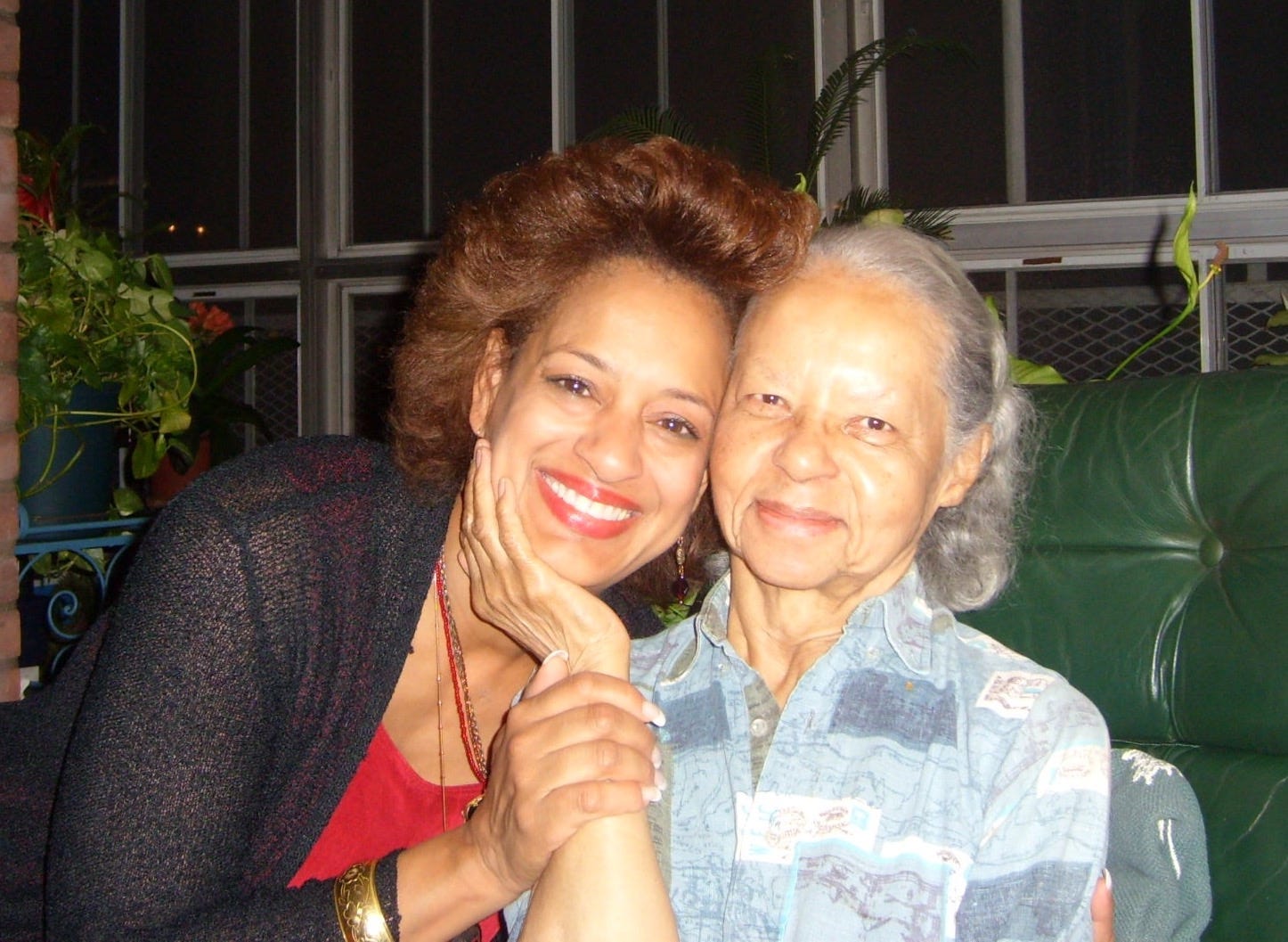
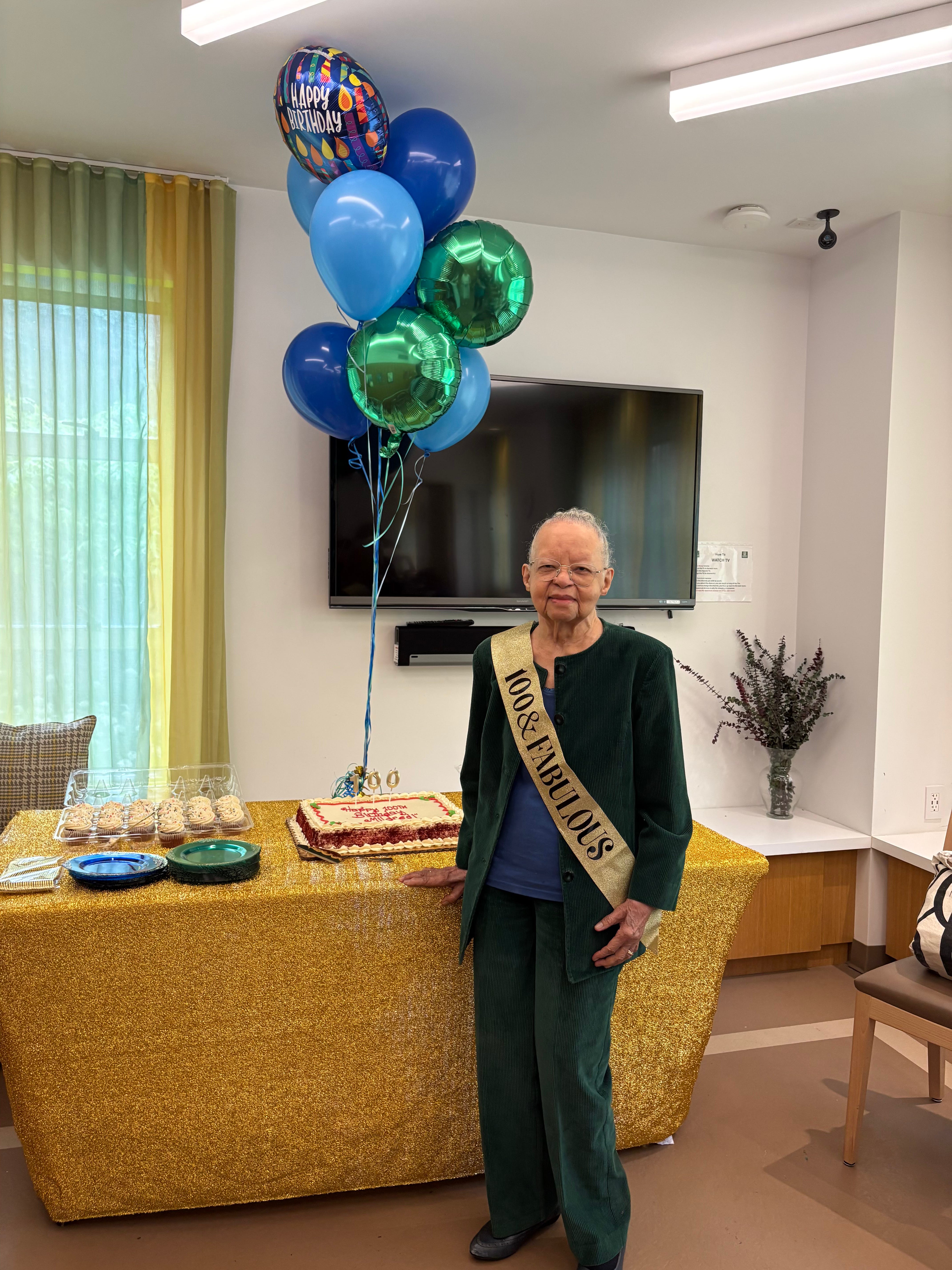
Dedicated to Mildred Bond Roxborough, with love and gratitude, as she turns 100.
There are women who enter our lives not merely as friends, bosses, teachers, elders, caregivers, or guides, but as quiet forces of formation. They don’t always announce themselves as mentors. They may never use the language of empowerment. They may simply notice us at the right time, take us seriously before we have fully earned our own seriousness, and hold a mirror steady enough for us to recognize something we might otherwise have missed.
Many of us become women through the eyes of women who could truly see us.
Really see us.
There is a particular kind of blessing in being seen by a grown woman when we are still becoming. Especially when we are young, unformed, hungry for life, unsure of our power, and not yet fluent in the language of our own worth. A woman who sees us can interrupt an entire inheritance of invisibility. She can notice intelligence where others only see quietness, depth where others see difficulty, leadership where others see defiance, beauty where others see excess, and promise where others see only youth.
There is another reason this theme feels so alive in me.
I lost my mother when I was fourteen. Before that loss, she had filled my early life with a sense of wonder about what it meant to be a woman. She was iconic to me: charismatic, gifted, vivid, glamorous, beautiful in spirit and presence, and alive with a kind of feminine force I could feel before I had language for it. Her loving engagement gave me an early imprint of womanhood as something expressive, intelligent, magnetic, and full of mystery.
Then she was gone.
And in the wake of that loss, something almost magical happened. It was as if life, knowing the rupture was too great for a young girl to carry alone, began magnetizing extraordinary adult women toward me. There were women took a special interest in me. They spent meaningful time with me. They invited my questions about life, not in a hurried or dismissive way, but with a kind of gentle seriousness. They answered me with wisdom that was kind, patient, and caring. They nurtured my self-confidence before it had fully formed, and they helped me imagine a future self I could not yet clearly see.
They did not replace my mother. No one could have done that. But they became part of the feminine constellation that helped raise me into myself.
This especially included my older half-sister, Alma, whom I came to know deeply as I entered college. Alma felt like a twin spirit, one of those rare souls whose presence seems to recognize you without explanation. She attended to me closely and unconditionally, with a love that felt both sisterly and maternal, intimate and spacious. She saw me in ways that steadied me. She made room for my becoming. And then, heartbreakingly, she too died too soon.
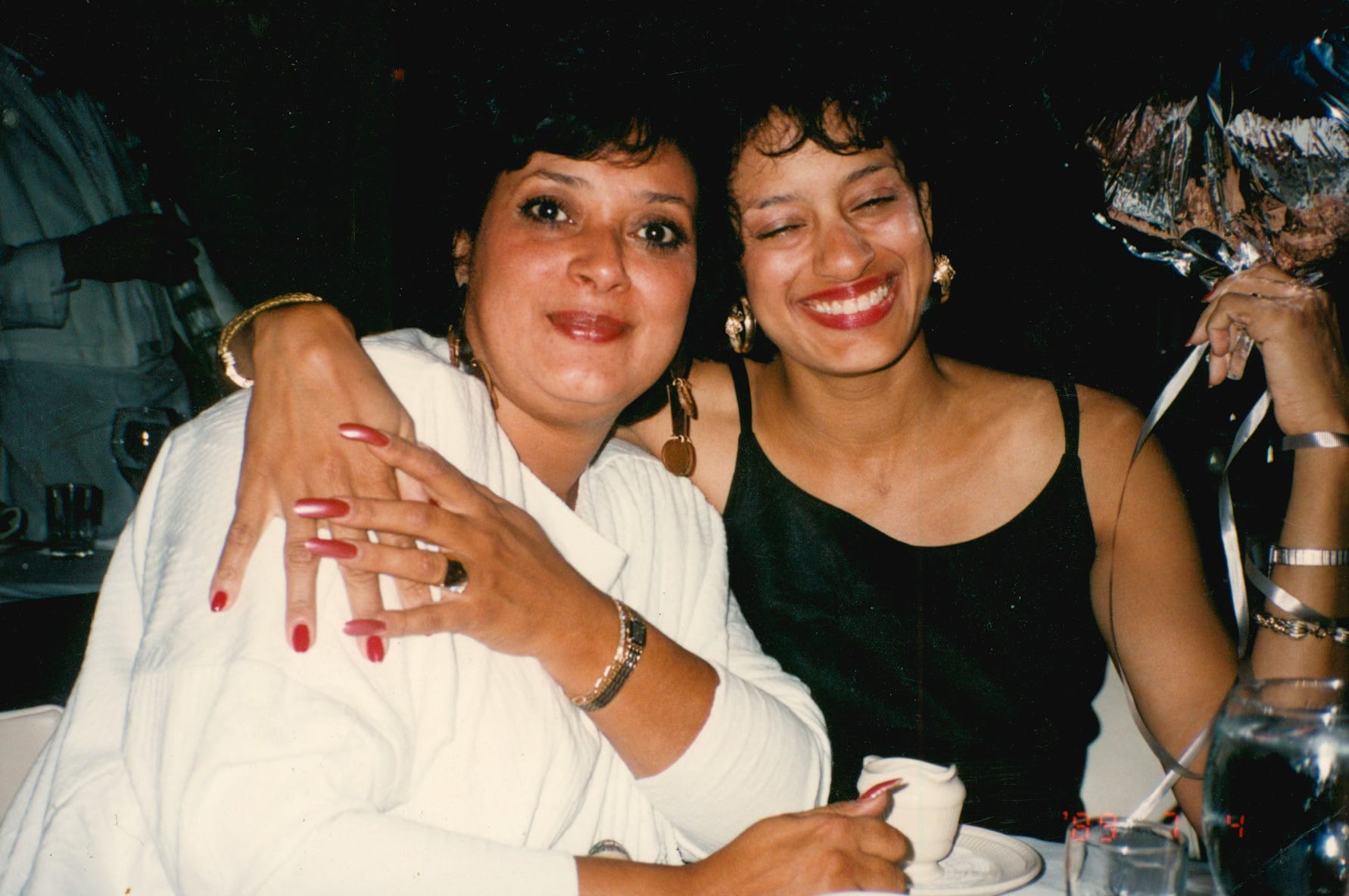
So when I think about mentoring women, I do not think only of formal guidance, professional sponsorship, or advice given across a desk. I think of the women who arrive after a rupture. The women who gather around a young life and help it continue opening. The women who become bridges between loss and possibility.
I think of the women who helped me keep becoming a woman after the first great woman in my life was gone.
The Women Who Help Us Imagine Ourselves
This post is dedicated to Mildred Bond Roxborough, who turns 100 this year, and who became one of the great mentoring forces in my life as I was turning seventeen.
Mildred’s public life is historic. Her service to the National Association for the Advancement of Colored People (NAACP) spans more than seventy years. She came from a family steeped in courage, sacrifice, and organizing. Her parents chartered the first NAACP branch in Brownsville, Tennessee, and paid dearly for that commitment. She was a Freedom Fighter in her teens. When she became part of the NAACP organization, she worked with figures whose names belong to the moral architecture of American history: Roy Wilkins, Medgar Evers, Daisy Bates, Thurgood Marshall, Robert L. Carter, and so many others. She orchestrated and executed their dynamic, national conventions for decades. She became THE woman who carried the inner workings, memory, discipline, and institutional soul of the NAACP across generations. She was the guide, mentor and historian for each leader since Roy Wilkins, and is deeply treasured as an indomitable and enduring icon. She retired only a few years ago and still consults regularly with the leadership team.
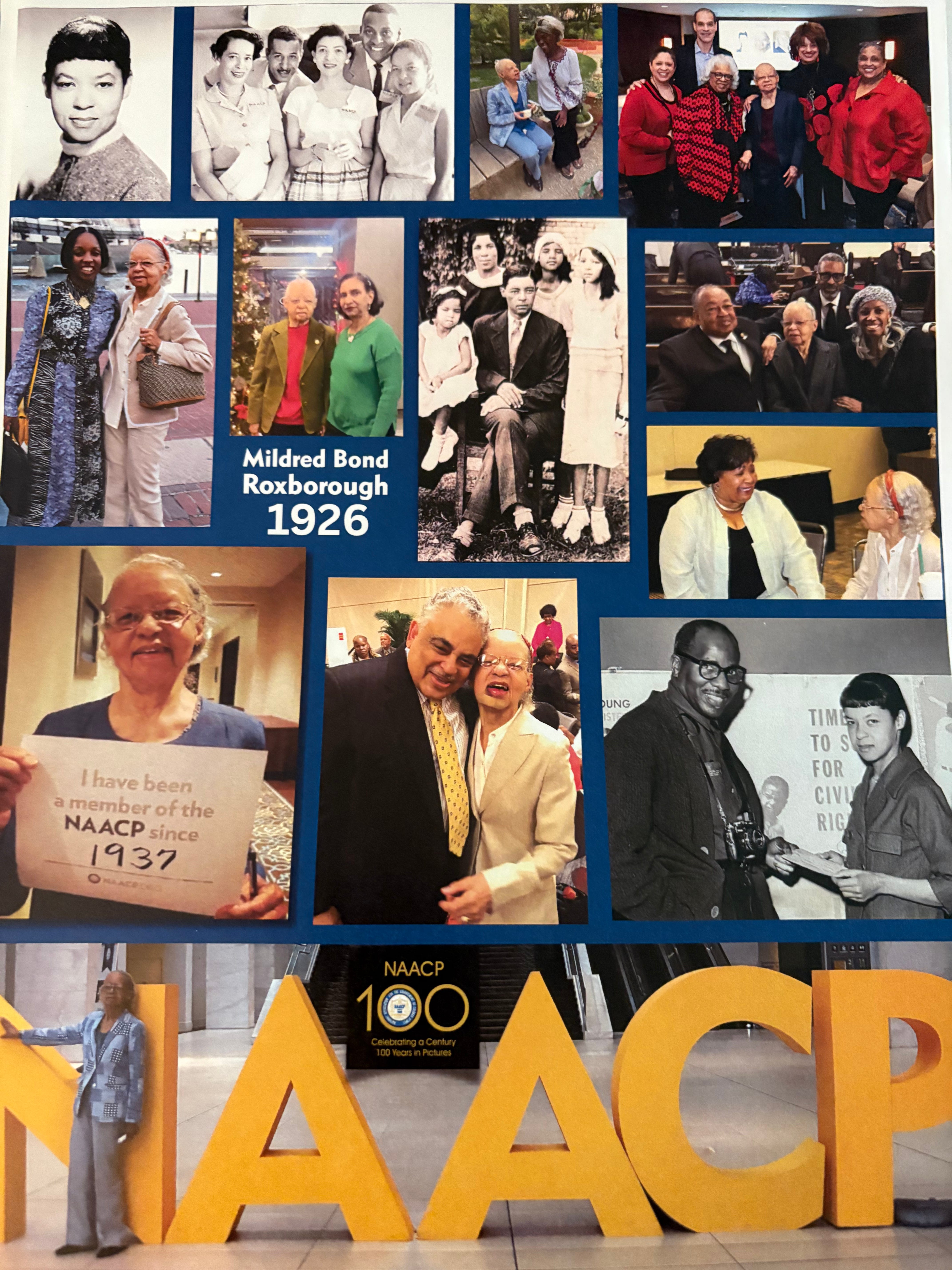
But this is not only about public history.
It is about the private ways a woman’s presence can alter the course of another woman’s life.
I met Mildred through my father. They were good friends through their NAACP activities and other connections. He recruited Mildred to host and house me during a summer course in NYC I was taking right after my first year in college. When Mildred took me in, I was still at that tender threshold between girlhood and womanhood, when the self is still arranging itself around questions it cannot yet name. Who am I allowed to become? Will anyone recognize the seriousness in me? Is there a place for my mind, my sensitivity, my ambition, my style of caring, my strangeness, my hunger to matter? Being around and with Mildred during that summer, I got to closely observe a fully formed, independent-thinking, self-sufficient, professional and highly intelligent maven operating as a heroine during the on-going civil rights movement, as well as a fun, insightful and generous host and blossoming friend.
We have been very close ever since – through my years of further education, jobs and all those milestones that bring meaning and longing. It’s actually hard to describe it exactly — our bond — she is both the closest of family and friend to me, and more importantly, she holds my heart, reliably and safely, while consistently nourishing my ability to keep growing.
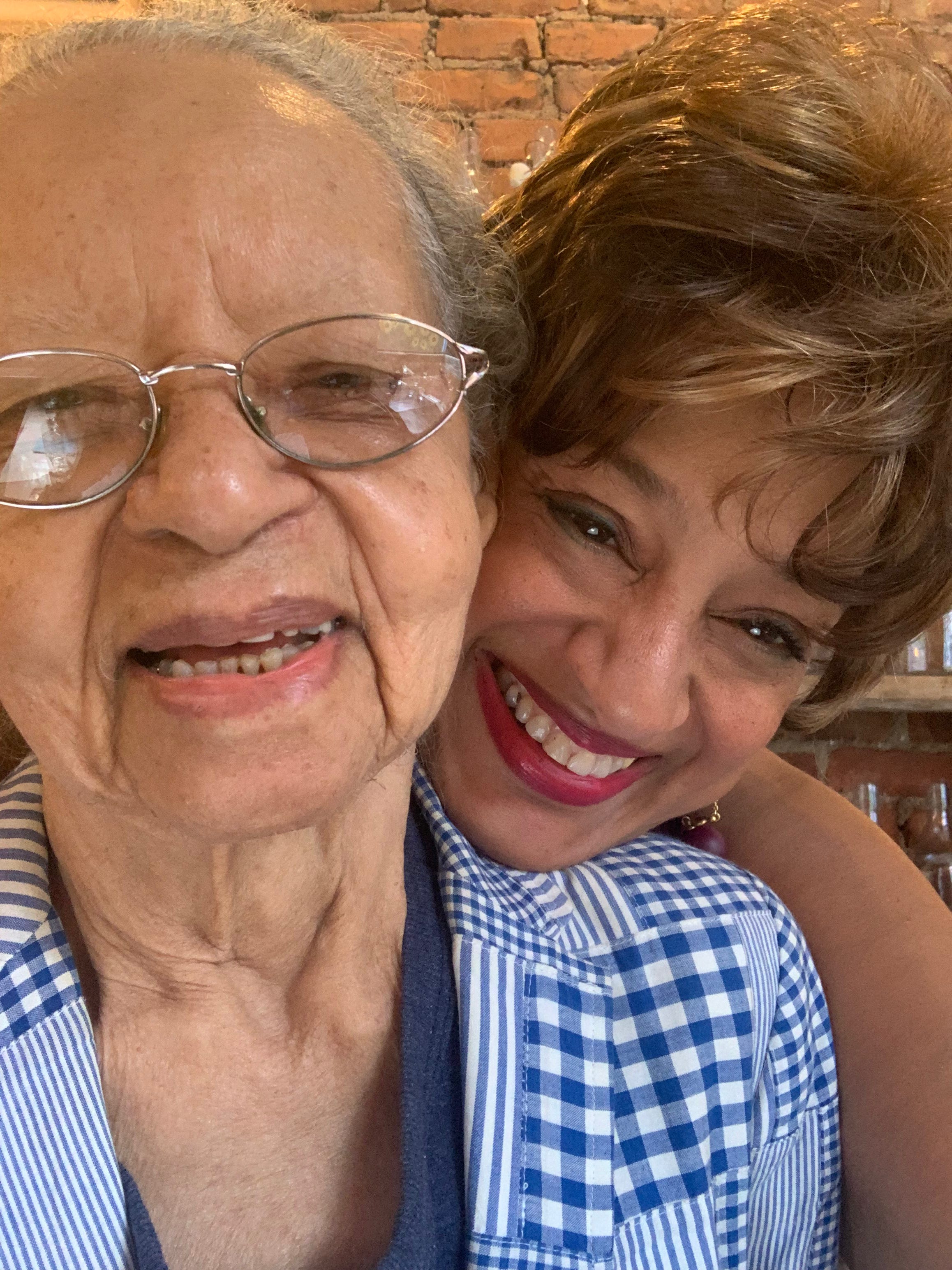
Mildred has always there for me without requirements or expectations. She taught me self-accountability and how to maintain an independent mind. She taught me resilience and how to live solo with joy and purpose. She encouraged a growth mindset, and she loved to listen and be my “muse” and counselor as I relayed my latest life “adventures” — as she called them.
I just had the privilege of organizing, with the NAACP and a team of devoted others, an amazing surprise 100th birthday celebration for her. So many people feeling as I do. In awe and grateful.
The Sacred Generosity of Being Seen
The great female mentors answer those questions not by giving speeches, but by how they regard us.
They give us access. They let us sit in rooms where life is being shaped. They allow us to overhear adult seriousness. They include us in conversations that are not condescending. They tell us the truth. They expect something of us. They assume we are capable of growing into the expectation.
And sometimes, without knowing it, they rescue us from the smallness of the world’s imagination.
I have been blessed by women like this. Mildred was one. Alma was one. There were also female bosses and adult friends whose impact was indelible. Women who had standards. Women who did not sentimentalize me, but did not diminish me either. Women who had made their way through systems not built for their ease, and whose very existence taught me that competence and grace could live in the same body. Women who soothed my self-doubt, nurturing into lessons learned and new chances to spread my wings.
These and other cherished women showed me that authority did not have to be loud, that elegance could be strategic, that kindness did not require weakness, and that a woman could carry both refinement and steel.
Looking back, I can see that these women were not simply giving advice. They were giving formation.
Each woman was transmitting her life force — her way of being.
That is one of the undernamed powers of women’s lives. We transmit. We carry codes of survival, beauty, discernment, courage, restraint, audacity, care, and self-possession. Sometimes we transmit harm, too, because none of us arrives unmarked. But when a woman has done enough living to become generous with her wisdom, she can become a sanctuary of possibility for those coming after her.
She can say, with or without words: You may grow here. You may become more of yourself here. I am not threatened by your becoming. I join and support you.
That last sentence matters.
Because not every woman can mentor. Not every older woman can bless the younger woman’s emergence. Some compete. Some withhold. Some control. Some pass down the same cages they inherited because no one ever helped them find the door. But the generous mentor is different. She’s not trying to reproduce herself. She’s not trying to create a smaller disciple.
She is helping another woman come into her own form.
This is one of the most sacred things women can do for each other.
And it is not limited to formal mentoring programs, professional advancement, or polished advice over lunch. It can happen on a phone call, in a kitchen, a workplace, a church basement, a boardroom, a hospital room, an office, a restaurant, a classroom, a neighborhood, a family event, or a civil rights organization that becomes the living container for a woman’s life work.
The Women Who Carry the Work
Mildred’s own life reminds me that women have often been the backbone of movements even when they were not always given the microphone. She has said, in speaking of women’s contributions to the NAACP, that without women there would not be an NAACP. That statement carries the clarity of someone who was there, someone who watched women organize, sustain, remember, strategize, feed, file, raise funds, hold the line, and keep institutions alive through pressure and history.
Women know how to carry the invisible labor of continuity.
They know how to remember what must not be forgotten, and attend to the details that make ideals livable. They know how to hold grief and logistics in the same pair of hands, and they know how to build trust slowly, through presence, reliability, and care.
But the question for us, in Still I Shine, is not only how women have carried history. It is how women carry each other.
Who saw you before you could fully see yourself?
Who treated your mind and ideas as worthy?
Who gave you a standard without shaming you?
Who opened a door, made an introduction, offered a correction, modeled composure, or simply let you feel the dignity of being taken seriously?
And perhaps most tenderly: who loved your becoming before it had proof?
As I honor Mildred at 100, I also honor the lineage of women who have shaped me. My mother, whose early radiance imprinted me before her absence broke the world open. Alma, whose close and unconditional love felt like recognition at the level of the soul. The women who entered after loss and did not make me explain why I needed steadiness. The bosses who showed me how to move through rooms with skill and substance. The adult friends who listened to my questions and gave me something more durable than reassurance. They gave me ways to imagine a life.
Some are well known to others. Some are very private. Some may never know the exact sentence they spoke, the small gesture they made, or the quiet confidence they placed in me that I carried for decades. But they are part of me. Their seeing became a kind of inner architecture.
The Lineage of Shine
This is how radiance is often formed.
Not through performance, but through recognition. Not through applause, but through being met. Not through being told we are special in a shallow way, but through being invited into responsibility, depth, purpose, and self-respect.
A woman who is well-seen can begin to live differently. She may stand taller, and risk. speaking. She may stop covering up her intelligence. She may become more discerning about who gets access to her tenderness. She may remember that her life is not meant to be a performance of acceptability, but an unfolding of truth.
And then, if she is blessed with time and consciousness, she becomes that force for someone else.
That is the circle I am thinking about today. The girl who was seen becomes the woman who sees. The woman who was encouraged becomes the woman who encourages. The woman who was steadied becomes the woman whose presence steadies the room.
Mildred’s life is a testament to justice, history, and civic courage. But for me, she is also part of a more intimate inheritance: the inheritance of women who help other women become.
May we remember them — name them while they are here and thank them while our gratitude tears our eyes.
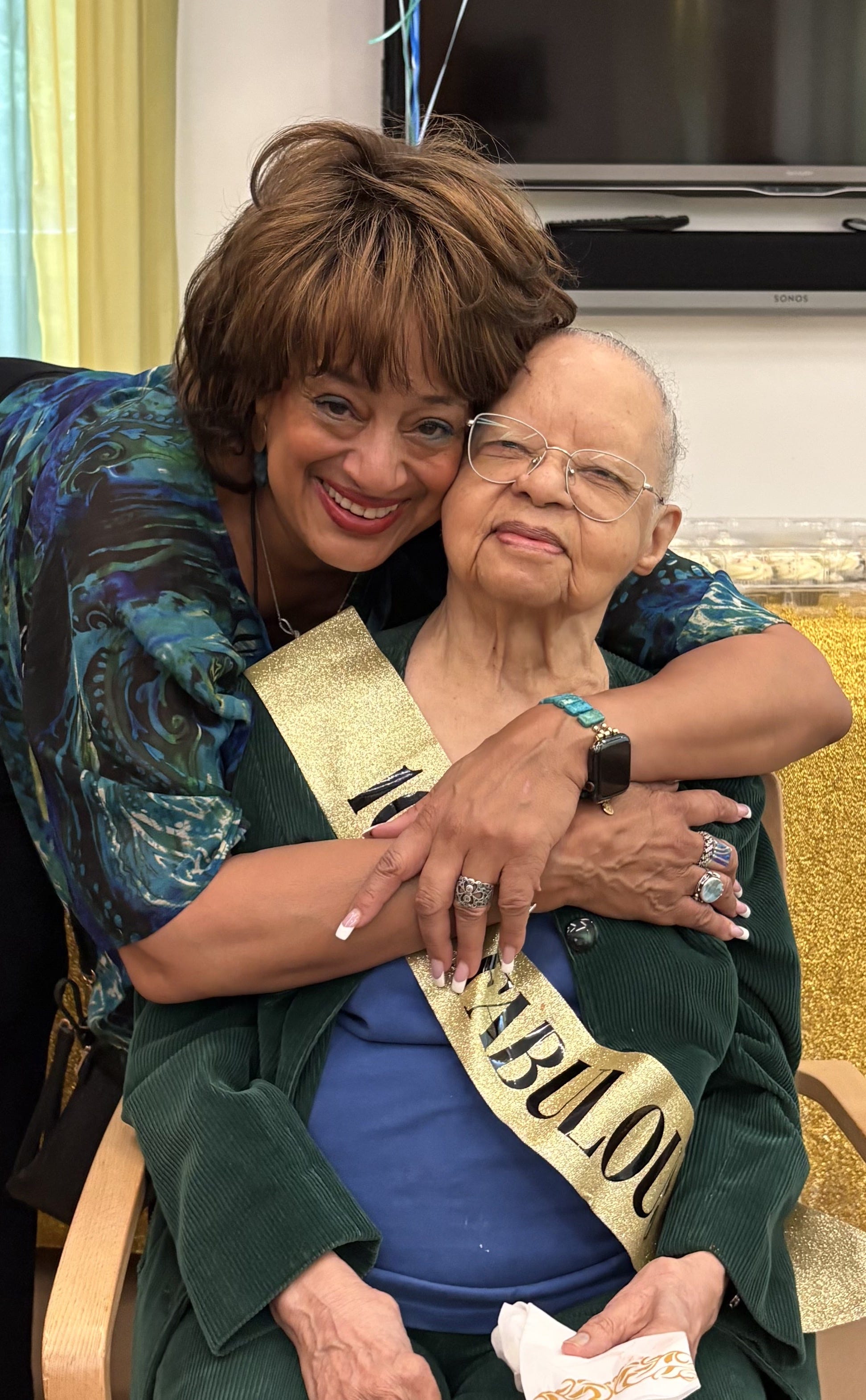
May we become, in whatever quiet or visible ways life asks of us, women who know how to see another woman into being.
Because sometimes that is the radiance that saves a life.
Sometimes that is the love that gives a woman back to herself.
Sometimes that is how we still shine.
And as grateful, aging-forward women like me, this is how we pay it forward…to remember and embrace — those young girls and women who need us.
If you’d like to spend more time with my work, you’re welcome to explore earlier pieces in this space, including the Emergence Codes and the Radiance Codes, and my “Living Out Loud” series. Click on the image below:

I’m really glad you’re here.
Check out my other newsletter:

How do you FLOW toward meaning and purpose?
Do you come alive mostly as a Helper-Enlightener, aDynamo-Liberator, Creator-Enterpriser, aScholar-Scientist, Aesthetic-Harmonizer, Idealist-Devotee or Manager-Reformer? Find out and take the EnteleKeys Reveal here.

Check out my new book: Unlock Your Potential with the EnteleKeys and take the free EnteleKeys Reveal assessment.
What a beautiful and sincere tribute!!!Mwah