

When a New Chapter Awaits, "Basic Trust" Leads to Aligned Evolution
Radiance Code 8: I trust the unfolding of my life, even when I cannot yet see the path ahead.


Recently, I was with an intimate group of friends when one friend shared her anxious frustration that she could not “know” what her next chapter would look like as she approached retirement the following year. Our conversation naturally widened into a deeper inquiry: how we face new chapters when the path ahead is unclear.
I found myself reflecting on my own evolving post-retirement chapter — one that has been shifting and realigning me in ways quite different from what I initially planned. I had invested deeply in becoming a professional coach, yet along the way I discovered unexpected joy and aliveness in creating and sharing my writing — writing that seeks to illuminate, orient, and uplift. Surprising too is that I evolved in a passionate painter of abstract art.
In hindsight, I can see that what carried me here was not certainty or strategy, but a willingness to relax, to experiment, pay attention to the signals of synchronicities and to engage what A. H. Almaas calls basic trust. I also trust that my current path, too, may one day give way to another chapter. A dear friend who has, and is experiencing some difficult transitions, nonetheless always tells me in a soft, assured and calm voice: “All is in divine order.” And I believe her.
This Radiance Code explores the interior experience of sensing that a new chapter awaits — whether it is chosen or arrives uninvited. It speaks to the moment before clarity, when excitement and anxiety coexist, and the old self stands at the edge of unfamiliar terrain.
When a New Chapter Is Already Calling
Long before a new chapter takes form, it announces itself quietly.
You feel it as a subtle loosening of certainty.
A restlessness you can’t explain away.
A sense that the life you know no longer quite contains you.
Sometimes we choose the transition — retirement, a new vocation, a conscious uncoupling, a reorientation of purpose. Sometimes it is thrust upon us — loss, illness, divorce, the death of someone close, the emptying of a long‑inhabited role.
Either way, the inner experience is strikingly similar: a sense that the old chapter has ended, but the new one has not yet revealed its shape.
The Fear Beneath the Fear
What unsettles us most in these moments is not simply change. It is the realization that the self we know must navigate terrain it has never walked before.
The fear is rarely dramatic. It is quiet and persistent:
Will I know how to be here?
Will my instincts still work?
Who am I without the familiar roles that organized my life?
This is not a lack of courage. It is the psyche confronting the loss of orientation. We are accustomed to competence. To fluency. To a sense of inner footing. A new chapter interrupts that familiarity.

Why We Beg for Certainty
At the threshold of a new chapter, many of us begin to seek reassurance:
reassurance that the decision is right
reassurance that the pain will be worth it
reassurance that we will not lose ourselves
We want guarantees because certainty feels like safety. But certainty belongs to the past, not the future.
The desire for reassurance is not weakness. It is the nervous system asking for something to hold onto while the old structures dissolve.
Excitement and Anxiety Can Coexist
One of the great misunderstandings of transition is the belief that fear means resistance. Often, fear lives right alongside excitement.
Something in you knows there is life ahead — expansion, possibility, truth —
and something else fears the cost of stepping forward without a map. These two experiences do not cancel each other out. They signal that you are standing at a genuine threshold.
New Territory Requires Re-Training Intuition
One of the quiet shocks of transformation is realizing:
My intuition is strong — but it learned itself in another ecosystem.
What worked in one terrain does not automatically translate to another. In a new chapter:
signals feel subtler
feedback arrives later
consequences unfold more slowly
discernment must be recalibrated

This does not mean intuition has failed. It means intuition is learning new parameters. Just as the body learns balance again after a new movement practice, the psyche learns trust again after a new identity context.
Patience here is not passivity — it is integration.
Relearning Trust in the Unknown
What carries us through these moments is not certainty, but basic trust.
Drawing on the work of A. H. Almaas, basic trust is not optimism, positive thinking, or blind faith. It is a deeper orientation — a lived sense that reality itself is intelligent and beneficent.
Basic trust rests on a quiet but radical knowing:
That the universal intelligence moving through life is inherently oriented toward truth, alignment, and the good — including within us and for us.
From this perspective, whatever feels disordered, painful, or destabilizing is not evidence of failure or abandonment. It is often a sign that something misaligned is coming into view so that it can be reorganized, integrated, or released.
Basic trust does not deny difficulty. It holds that what is out of alignment will eventually be brought into alignment, and that this process — however uncomfortable — serves a deeper coherence.
When we live from basic trust, we stop demanding guarantees from the future.
Instead, we begin to sense that:
life is not working against us
disruption carries intelligence
unfolding has direction, even when we cannot yet see it
Basic trust allows us to say:
“I do not yet know how this chapter will unfold — but I trust that what is emerging is aligned with what is true and necessary for my becoming.”

This trust is not something we reason our way into. It is something we practice — again and again — by staying present, listening inwardly, and allowing life to reveal its next step in its own timing.
Living from basic trust also changes how we listen and feel.
We begin to pay attention to subtle signals and synchronicities — conversations that linger, invitations that repeat, doors that open unexpectedly, resistances that persist despite effort.
These are not instructions to follow blindly, but information to notice.
When we are not forcing outcomes, life often communicates through timing, resonance, and pattern. What aligns gathers energy. What doesn’t align quietly loses momentum.
Basic trust invites us to remain curious about these signals, to let them inform our next steps without surrendering our discernment or agency.
Basic Trust is not something we reason our way into. It is something we practice — again and again — by staying present, listening inwardly, and allowing life to reveal its next step in its own timing.
Letting Desire Replace Dread
At some point, the work of transition shifts. Instead of asking, How do I avoid the unknown? We begin to ask, How do I meet it with curiosity?
New chapters are not entered through commitment, but through experimentation.
They ask us to move forward lightly — to try on new experiences the way we try on new shoes. Not to decide immediately, but to feel.
What feels enlivening?
What constricts?
What opens possibility — and what quietly drains it?

This kind of exploration requires presence rather than certainty. It asks us to release the impulse to settle into what is logical, familiar, or already proven.
A new chapter gives us permission to step beyond our comfort zone:
into new learning
into unfamiliar conversations and connections
into pathways we may later refine — or leave entirely
Even when we have invested time, hope, or effort.
Desire, here, is not recklessness. It is discernment in motion.
When we allow ourselves to experiment without premature allegiance, fear loosens its grip — and the unknown begins to feel navigable.
A Closing Reflection
If you sense a new chapter waiting, consider:
What am I afraid of losing — and what might I be afraid to want?
Where am I asking for certainty when trust is being invited instead?
What would it feel like to meet this transition with openness rather than urgency?
Finally, consider prior transitions in your life, and kindly reflect upon the flow of your evolution. Then ask yourself, can I now fully engage in basic trust?
A new chapter does not ask us to be ready. It asks us to be willing.
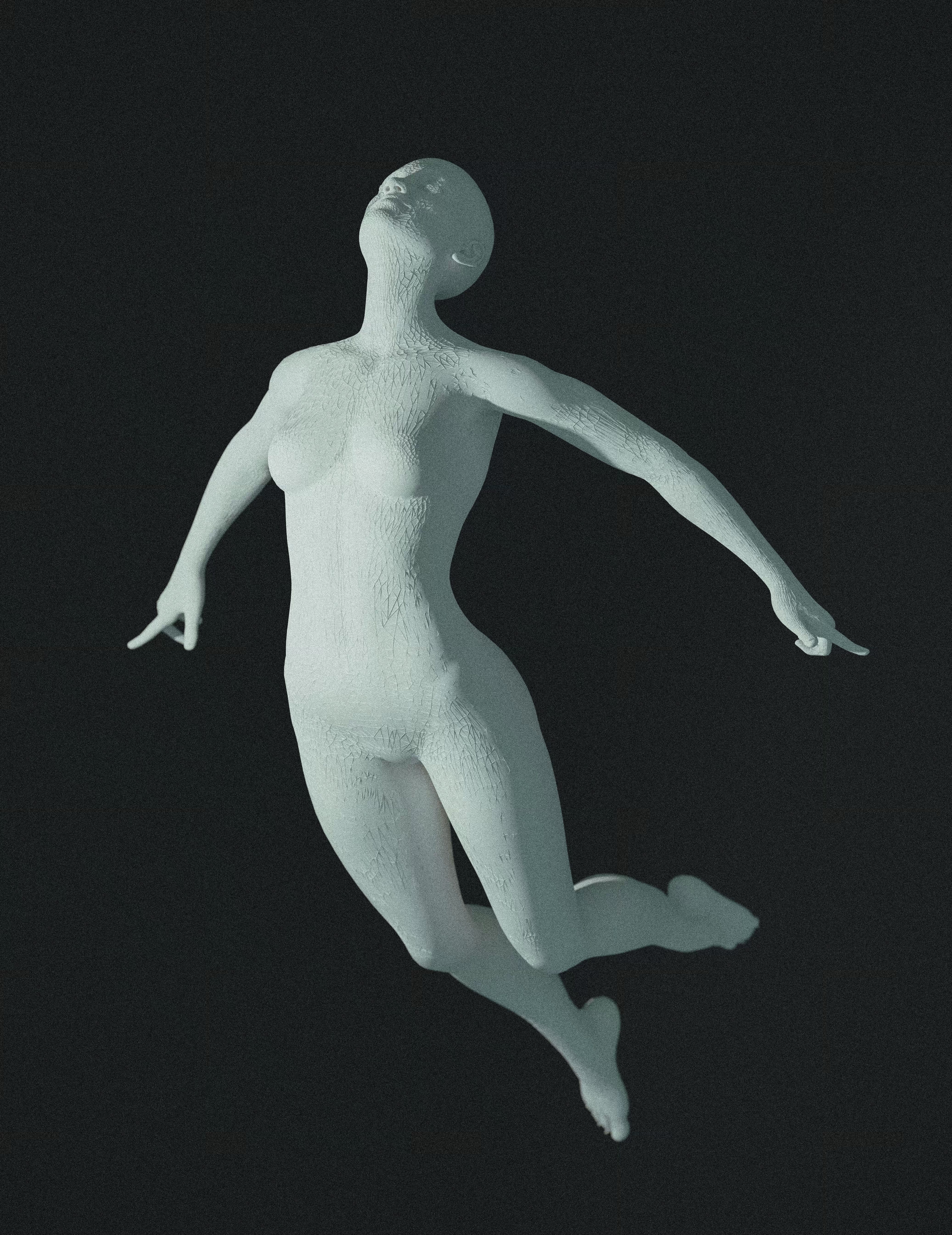
Radiance, here, is not confidence in the outcome —it is trust in the unfolding. Trust with me.
Love, Angelique
*Photos by Unsplash
For more about the Emergence Codes and the Radiance Codes, I welcome you to explore prior posts. Thank you for visiting!